



















































*Charges Africa to look inward in development financing
*Says African capital markets underutilised
The Development Bank of Nigeria (DBN) has said that it disbursed over N1 trillion to Micro, Small, and Medium Enterprises (MSMEs) across the country and created more than 1.2 million jobs.
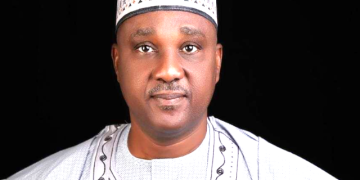
The Managing Director of the bank, Dr Tony Okpanachi, disclosed this in an interview with the News Agency of Nigeria (NAN) on the sidelines of the African Development Bank (AfDB) Annual Meetings in Abidjan
Okpanachi described DBN’s progress as a major milestone in its mission to enhance access to finance for Nigeria’s small businesses.
“We are proud to report that at the end of 2024, DBN had disbursed over N1 trillion to MSMEs through our partner financial institutions.
“The support has helped to stimulate economic activity and improve livelihoods, especially at the grassroots.
“In terms of job creation, we have been able to support over 1.2 million jobs directly and indirectly,” he said.
Okpanachi attributed the bank’s impact to its wholesale lending model, which channelled funds to commercial banks and microfinance institutions that then on-lend to small businesses.
He, however, acknowledged that, while progress had been made, the financing gap in the MSME sector remained significant.
“The need is massive and we are not resting on our oars.
“There is still much more to be done to close the access gap and expand our reach,” he said,
The DBN chief emphasised the importance of building on the momentum through policy reforms, increased collaboration with development partners, and innovative financing instruments.
He also praised outgoing AfDB President, Dr Akinwumi Adesina, for his decade-long leadership at the bank, noting that his achievements had laid the groundwork for future growth.
“Under Adesina, AfDB has nearly tripled its capital base and disbursed more in ten years than it did in its first 50 years. That is no small feat,” Okpanachi said.
He called for continuity in leadership and vision to sustain the gains made and drive Africa’s development agenda forward.
LOOK INWARD IN DEVELOPMENT FINANCING
The Development Bank of Nigeria (DBN) has advocated renewed commitment to mobilising internal capital across African countries to accelerate development on the continent.
The Managing Director of the bank, Dr Tony Okpanachi, said this on the sidelines of the African Development Bank (AfDB) Annual Meetings in Abidjan, Côte d’Ivoire.
Okpanachi said one of the key issues discussed at the meetings was how African countries can raise more domestic capital to fund development priorities instead of relying solely on external resources.
“We need to strengthen our internal capacity to finance development.
“This can be achieved by tapping into capital markets, enhancing pension fund investments, and leveraging domestic financial institutions to drive impact,” Okpanachi said.
He highlighted the role of national development finance institutions (DFIs) and the private sector in supporting this ambition, and stressed the need for collaboration across sectors.
“Mobilising capital should not just be left to governments or multilateral institutions.
The private sector has a key role to play, and partnerships across industries will be essential,” he said.
Okpanachi also pointed out the critical impact sectors that required urgent investment, including agriculture, infrastructure, and intra-African trade.
He urged Africa’s development institutions to align with international partners to build a united front toward achieving lasting economic transformation.
Okpanachi said the conversations at the AfDB meetings were timely and commended Dr. Akinwumi Adesina.for a successful tenure as the regional bank’s leadership
AFRICAN CAPITAL MARKETS UNDERUTILISED
Dr Tony Okpanachi, Managing Director, Development Bank of Nigeria (DBN), says African capital markets, with their rich potentials, remain underutilised.
Okpanachi made the assertion in an interview with the News Agency of Nigeria (NAN), on the sidelines of the African Development Bank’s Annual Meetings in Abidjan, Côte d’Ivoire.
He said the continent’s capital markets, if properly managed, have the rich potential for mobilising long-term funds for infrastructure and other critical investments.
According to him, most African countries have sizeable pension funds that could be redirected toward development, if channeled properly.
“The capital market and pension fund systems in African countries are vital engines for unlocking long-term development financing on the continent.
“These funds are typically long-term in nature and can only be accessed through transparent and structured mechanisms like the capital market.
“This offers an avenue to finance roads, power projects, and other critical infrastructure,” he said.
Okpanachi emphasised the need to deepen Africa’s capital markets to improve transparency, unlock pension assets, and provide stable financing for large-scale projects.
The DBN boss also noted that other financing options, such as syndicated loans through commercial banks, remain important, especially when blended with development finance from institutions like DBN.
“From DBN’s side, we provide wholesale funds to commercial and microfinance banks, which in turn extend credit to small and medium businesses.
“These are longer-term funds that serve as a catalyst for further private sector lending,” he explained.
He said that, as Nigerian banks and others on the continent expand their capital base, they would be better positioned to support both commercial and developmental goals