

































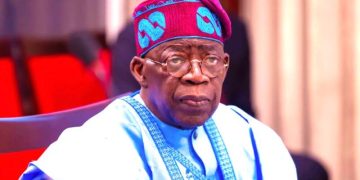









SEGUN OTOKITI writes on the leadership crisis rocking the Christ’s Chosen Church of God International (CCCG) in Nigeria, following the alleged forced retirement of the church’s second-in-command, Apostle Dr. Pius Igberase
WorldStage– Many theologians, social commentators, and everyday believers point out a stark contrast between Christ’s foundational warnings to the Church and the modern-day practices seen in some Nigerian Christian institutions.
While Nigeria is home to some of the world’s largest congregations and most vibrant expressions of faith, critics argue that corporate greed, moral compromise, and theological deviation have created a deeply visible rot.
The New Testament contains explicit warnings from Jesus Christ regarding how his followers and leaders should conduct themselves. These warnings directly confront many current trends
Notwithstanding the warning, a leadership crisis has rocked the Christ’s Chosen Church of God International (CCCG) in Nigeria, following the alleged forced retirement of the church’s second-in-command, Apostle Dr. Pius Igberase.
The controversy centers on allegations of a power tussle, the indefinite suspension of Igberase’s wife, and subsequent protests.
Having the church administration and succession as it’s background,
Christ’s Chosen Church of God International, headquartered in Benin City, Edo State, is a prominent indigenous Christian ministry in Nigeria.
Like many large, hierarchical religious organizations in West Africa, the church operates under a structured spiritual and administrative hierarchy.
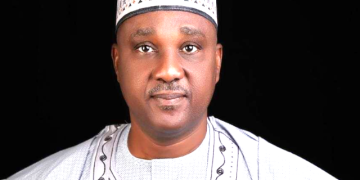
At the helm is the Spiritual Leader and General Overseer, currently Most Senior Apostle Dr. David Unuefe-Ikhiuwu. Until recently, Apostle Dr. Pius Igberase served as the second-in-command, holding the titles of Vice President of the Church Council Worldwide and number two in the church hierarchy.
In ecclesiastical organizations with long-serving founding or primary leaders, transitions of power and succession planning frequently become points of intense internal debate.
The position of the second man in command inherently carries significant influence, positioning that individual as a primary successor to the primary leader.
As catalyst, suspension and forced retirement of Igberase fuelled the crisis to reach the public domain following a series of events involving Apostle Igberase’s family and his exit from the church hierarchy.
Reports and viral content circulating across platforms indicated that the church leadership placed Igberase’s wife on indefinite suspension from the ministry. The friction reportedly originated from a sermon delivered by Mrs. Igberase, which touched on issues of immorality. While the sermon was ostensibly designed to address broader moral decay, church authorities interpreted the message as a direct critique of the spiritual leader, Most Senior Apostle Unuefe-Ikhiuwu.
Consequently, church administration viewed the sermon as insubordination and subsequently issued the indefinite suspension.
In what is perceived as a show of solidarity and protest against the suspension of his wife, Apostle Igberase reportedly relinquished his position as the church’s second-in-command.
In many Nigerian ministry circles, such resignations or early retirements of high-ranking officials are rarely straightforward; they often reflect deeper, underlying ideological or administrative disagreements regarding how the institution should be run.
As news of the developments circulated online, the church membership became polarized. Protests and debates over the legitimacy of the church’s actions played out on community groups and social platforms, including Facebook.
The faction supporting leadership
aligned with the General Overseer’s administration, maintaining that the church followed its established constitutional protocols.
From this perspective, Igberase’s wife committed an administrative and doctrinal breach, and church leadership holds the absolute right to enforce discipline.
Furthermore, supporters of the incumbent leadership have accused the Igberase camp of orchestrating a campaign to usurp authority and push the current spiritual leader aside prematurely.
Conversely, supporters of the retired or sacked deputy claim that the allegations are politically motivated. This faction argues that Apostle Igberase was unfairly targeted, and that the suspension of his wife was merely a pretext to force a highly influential second-in-command out of the administrative equation before a formal succession could take place.
The leadership turmoil within Christ’s Chosen Church of God mirrors similar succession and tenure disputes frequently observed in the Nigerian Christian space.
Over the years, several prominent Nigerian ministries—including the Redeemed Christian Church of God (RCCG), the Assemblies of God, and the Celestial Church of Christ—have faced public crises tied to leadership transitions, retirement age, and constitutional amendments.
In Nigeria, the concept of a pastor’s retirement or term limits can sometimes conflict with traditional views of ministry as a lifelong divine calling rather than a standard corporate employment.
While corporate governance codes—such as the one previously attempted by the Financial Reporting Council of Nigeria—have sought to impose age or tenure limits on religious leaders, many churches reject these ideas, resulting in internal policy struggles.
As tensions have escalated, concerned members and observers have called for intervention and mediation.
In situations involving deep doctrinal and administrative disputes, the intervention of broader Christian bodies, such as the Christian Association of Nigeria (CAN), is sometimes anticipated to mediate.
At the core of the Christ’s Chosen Church crisis is the need to balance respect for constituted spiritual authority with the need for fairness, transparency, and due process.
Observers and senior members of the church are pushing for a transparent internal investigation into the allegations leveled against the former second-in-command and the exact reasons behind the indefinite suspension of his wife.
Ensuring that the institution does not split into splinter factions over this controversy remains the primary challenge for the church’s governing council.
The ongoing saga at Christ’s Chosen Church of God International serves as a case study in the complexities of managing succession and authority in large, traditional Nigerian religious institutions. The coming months will determine whether the church council can successfully mediate the divide, address the grievances of both the incumbent leadership and the camp of Apostle Igberase, and restore organizational unity.