






































Nigerian Institutions of Space Engineers (NISE) and the Nigerian Society of Engineers (NSE) are sensitising the government and regulatory bodies in the country on the need to invest in the space technology industry.
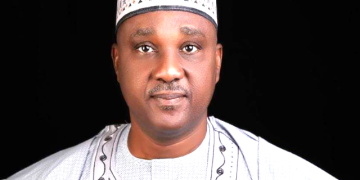
Dr Spencer Onuh, the Chairman NISE in an interview with the News Agency of Nigeria (NAN) on Saturday said domesticating space technology in the country requires indigenous codes and standards for the growth of the industry.
He said although space technology in the country was at its infancy, adding that an existing codes and standards would serve as guidelines for practicing in the sector.
He said, “We know that there are regulatory bodies in Nigeria, there concern now is not space but we as Nigerian Institutions of Space Engineers have the responsibility to let them know the benefits of space.
“We are letting them know that we can get there with the capacity that we have in this country and indigenising space technology requires indigenous codes and standards as well.
“Even if the codes and standards are not 100 per cent indigenous, we could adopt or adapt an existing type to suit our own environment.
“Our environment differs but space environment is the same.
“Some of the equipment developed is used on the terrestrial surface and the temperature, humidity, geography of places differs.
“That is why we design some components and we can’t use them in the west and in the U.S. because of the temperature variation, but when we develop it for our own environment, we can use it.”
The NISE boss said that countries developed their indigenous codes which any other interested country could purchase, either the whole system or the interface.
He said the institution was working toward designing standards that could be used internationally.
“Space codes and standards are not that open. Countries develop their own because they develop the components and they want you to buy those components with no other person to develop that.
“You could have the innovation capacity to develop your codes because it has heritage. So whoever that is buying from you must also buy the interface.
“In information communication technology now, you can buy spare part components from anybody, all you need is to plug in but it is not readily available in space technology.
“What we are trying to do is develop the standard in a way that even if these components are designed and manufactured in Nigeria, it can be used in any space craft or aircraft anywhere in the world.”
Onuh, however, said that Nigerian engineers had the capacity to develop any interface but an embedded system was required.
According to him, the embedded system will be used to develop, generate the codes, transfer the language and interpret it.
He regretted that the country made use of other country’s standards which was a setback to the industry.
“We don’t have any code; we have been using various types. When we work in the U.K. it was the European Space Agency code we used, the same with in China.
“We can develop ours to be where we need to be. Codes and standards are key and the path is the path of developing our indigenous capacity and capability,” he said.
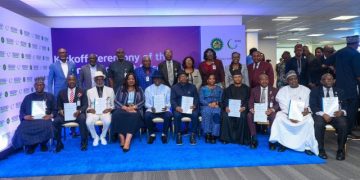
NAN reports that the NISE in collaboration with NSE recently held a workshop in Abuja to come up with codes and standards for the industry.
Mr Adekunle Mokuolu, the President of Nigerian Society of Engineers (NSE) had said that unpreparedness had limited setting codes and standards in sectors of engineering.
Mokuolu said the society had developed codes for mechanical, electrical engineering and was working toward developing for other areas of engineering.
He commended space engineers, who had championed the awareness on the importance of space technology, saying their efforts had made for the acceptance of the sector within the government purview.
“Sustaining the momentum of space technology can only be achieved through training and empowerment of personnel.
“Codes and standards are the technical guidelines for promoting, safety, reliability, productivity and efficiency in engineering work.”
Mokuolu was represented by Mr Joseph Akindeye, the Vice President of the society.