







































WorldStage– Nigeria’s Minister of Marine and Blue Economy, Dr Adegboyega Oyetola, has secured a $200 million financing commitment from the World Bank Group to accelerate domestic fisheries and aquaculture production.
The strategic intervention is designed to scale up local fish output, stimulate economic opportunities, and drastically cut the country’s high dependence on seafood imports.
The disclosure was made in Abuja during a high-level executive training on the Aquaculture Investment Guide, organized by the ministry in collaboration with the World Bank Group.
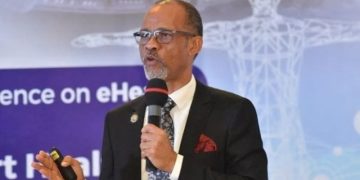
Professor Busayo Fakinlede, the Senior Special Assistant to the President on Marine and Blue Economy, delivered the details on behalf of the Minister.
According to Oyetola, the $200 million package will be disbursed to state governments as concessional loans, with the framework allowing individual states to identify priority aquaculture value chains, evaluating commercial viability, and creating bankable project pipelines to attract private sector capital.
Technical and policy officials, including commissioners from key coastal states like Rivers, Bayelsa, Delta, and Cross River, participated in the event to align sub-national plans with the national strategy.
Nigeria currently faces a severe fish supply deficit exceeding 2.2 million tonnes annually.
While total national demand stands at approximately 3.6 million tonnes, the country produces only 1.4 million tonnes.
To fill this widening gap, Nigeria spends nearly $1 billion annually on fish imports, placing a heavy strain on foreign exchange reserves.
“Fish is a pillar of food security, household nutrition, and rural livelihoods,” Oyetola noted, adding that no nation can achieve true food security while importing the bulk of its protein.
He outlined the ministry’s goal to transform Nigeria from an import-dependent nation into a net exporter of fish products.
The ministry has recorded steady progress in recent months following the launch of the Technical Committee on Accelerating Fish Production that tipped local output increased from 1.1 million to 1.4 million tonnes.
The digitisation of fish import licensing and compliance with international standards—such as achieving US shrimp-export certification—have also strengthened the sector’s regulatory framework.
The newly secured World Bank funding will drive infrastructural initiatives like the “Fish City” and “Fish Terminal” investment portfolios. To ensure seamless execution, Oyetola announced that a post-training stakeholders’ roundtable will be held to formalize implementation arrangements between the federal government, state leaders, and private investors.






