




























































*As REA signs seven MoUs to accelerate productive use of energy technologies across Nigeria
By Abiodun Folarin
WorldStage— The Federal Government has reaffirmed that expanding electricity access must translate into higher productivity, job creation and economic growth, as the Rural Electrification Agency (REA) signed seven strategic Memoranda of Understanding (MoUs) to accelerate productive use of energy technologies across Nigeria.
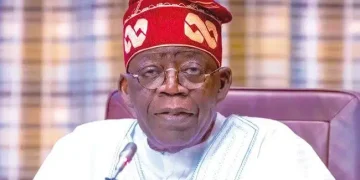
Speaking at the National Stakeholders Engagement Workshop in Abuja on Thursday, the Minister of Power, Joseph Tegbe said the Tinubu administration is repositioning rural electrification from simply extending power infrastructure to driving economic transformation.
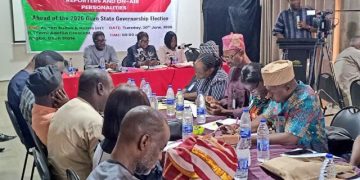
The workshop, organised by the REA in collaboration with the Economic Community of West African States (ECOWAS) and the Global Off-Grid Lighting Association (GOGLA), was held under the theme: “Unlocking and Scaling the Sustainable Adoption of Productive Use of Energy Technologies Across Nigeria: Harmonising Financing Opportunities and Policy Frameworks.”
According to the minister, electricity should no longer be viewed merely as a social service but as a catalyst for enterprise, wealth creation and inclusive development.
“Our approach to energy diversification under the administration of President Bola Ahmed Tinubu reflects a simple but profound truth: rural electrification is no longer about extending wires into communities. It is about extending opportunity. It is about creating prosperity. It is about enabling enterprise. It is about transforming electricity from a social service into an economic catalyst,” Tegbe said.
He urged stakeholders to redefine how progress in the electricity sector is measured, noting that while power generation capacity, transmission infrastructure and electricity connections remain important indicators, the real measure of success lies in the economic activities electricity enables.
“When we speak about electricity, we often measure success by megawatts generated, kilometres of distribution lines constructed, or the number of households connected. Those are important indicators, but they are not the ultimate objective. The true measure of success is what electricity enables,” he said.
Tegbe stressed that electricity becomes transformational only when it powers productive activities, adding that the Productive Use of Energy (PUE) agenda sits at the intersection of agriculture, industrialisation, financial inclusion, climate resilience, food security, rural development and job creation.
He noted that inadequate electricity supply continues to contribute to significant post-harvest losses in the agricultural sector, explaining that the PUE initiative is designed to address the challenge by supporting the deployment of energy-efficient equipment that lowers operating costs, boosts productivity and improves farmers’ incomes.
Earlier, the Managing Director of the Rural Electrification Agency, Dr. Abba Aliyu, called for stronger collaboration among Ministries, Departments and Agencies (MDAs), development partners and the private sector to ensure sustainable energy interventions.
Aliyu said greater coordination during the planning and design stages of projects would maximise available resources, eliminate duplication and create scalable models that can be replicated nationwide.
“Projects are managed by a project team. They are scoped, budgeted, delivered and closed. Nigeria has had many such projects in the energy and agriculture space, some successful and some not. What we are trying to build today is something different: a system,” he said.
He described smallholder farmers and Micro, Small and Medium Enterprises (MSMEs) as the backbone of Nigeria’s food system, stressing that institutional collaboration is needed to connect fragmented efforts into a sustainable national framework.
According to him, the workshop was convened to enable government institutions, development partners and private sector players align responsibilities and build systems capable of sustaining impact beyond donor-funded projects.
As part of efforts to deepen productive energy access, the REA signed seven strategic Memoranda of Understanding with organisations across agriculture, housing, renewable energy and youth development.
The agreements were signed with the Agricultural Agenda Nigeria Initiative (AANI), Federal Housing Authority Energy Distribution Limited (FHAEDL), Meyana Energy Ltd, MOPO Nigeria Ltd, NG Electometer Ltd, Ubuntu Energy, and Youth Sustainable Development Network Ltd/GTE.
The partnerships are expected to strengthen access to electricity for productive uses, expand clean energy deployment and support economic activities in underserved communities across the country.