

















































WorldStage– The Infrastructure Concession Regulatory Commission (ICRC), says the newly unveiled Nigeria Model Public-Private Partnership (PPP) Agreement will prevent a recurrence of P&ID-type transactions and strengthen safeguards against costly contractual liabilities.
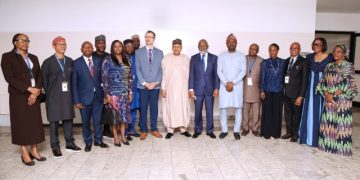
Dr Jobson Ewalefoh, the Director-General, ICRC, said this on the sidelines of a stakeholder engagement session on the Nigeria Model PPP Agreement in Abuja on Tuesday.
A private arbitration tribunal in 2017 ordered the Federal Government of Nigeria to pay an 11 billion dollar arbitration award to P&ID over a gas supply and processing agreement in 2010 that collapsed.
However, Nigeria challenged the enforcement and in October 2023, a UK court presided over by Justice Robin Knowles set aside the 11 billion dollar award in favour of Nigeria, adding that the agreement was obtained fraudulently.
Ewalefoh said the new framework provides a standardised contractual template and a comprehensive legal structure for all PPP arrangements involving Ministries, Departments and Agencies (MDAs).
He said the model agreement would prevent poorly structured contracts and ensure that all PPP projects received the requisite regulatory scrutiny before execution.
“With the coming of ICRC and this template that was unveiled today, I can tell you that gone are the days of any P&ID kind of transaction.
“The president has said it many times and even the Ministry of Budget and Economic Planning has issued a circular that any PPP arrangement done by any MDA without the clearance of the ICRC is illegal, null and void.”
He added that the framework would serve as a checklist for investors and government agencies, ensuring compliance with established procedures from project conception to implementation.
“If P&ID had passed through the process we have in place today, there would not have been a P&ID issue. No PPP agreement can now be signed without the authorisation of the ICRC,” he said.
Ewalefoh explained that the model contract was the outcome of more than two years of consultations involving the Ministry of Justice, PPP stakeholders, legal practitioners, financiers and experts in the infrastructure ecosystem.
He said the initiative was designed to boost investor confidence by providing a proper legal and regulatory environment for infrastructure investments.
According to him, increased private sector participation will help bridge Nigeria’s infrastructure deficit through the delivery of roads, bridges, airports, hospitals, schools, housing and other critical projects.
“What the average Nigerian should expect to see is more PPP projects that will help build infrastructure across the country.
“This is a major step towards laying a solid foundation for PPPs in Nigeria because PPP is fundamentally about agreements and partnerships between the public and private sectors,” he said.
On project oversight, the ICRC boss said the model agreement incorporates monitoring and compliance mechanisms to track implementation and ensure that parties meet their contractual obligations.
He noted that the commission had a dedicated department responsible for project monitoring and compliance and was also required by law to submit periodic reports on PPP projects to the president.
“The template creates a clear checklist for monitoring projects and ensuring that all parties adhere strictly to their obligations and deliverables as contained in the contract,” he said.
Earlier, the Solicitor-General of the Federation and Permanent Secretary, Federal Ministry of Justice, Mrs Beatrice Jedy-Agba, described the model agreement as a significant milestone in strengthening Nigeria’s PPP framework.
Jedy-Agba said the document reflected the shared vision of the ministry and ICRC to promote transparency, accountability and value for money in infrastructure development.
She said the Ministry of Justice played a critical role in scrutinising indemnity clauses, mitigating legal risks and establishing robust dispute resolution mechanisms to protect the Federal Government from predatory litigation, sovereign defaults and unfair risk allocations.
“To meet these sophisticated demands, the ministry has enhanced the capacity of its law officers through specialised training in infrastructure law, commercial risk analysis and project finance to ensure thorough review of complex PPP agreements.
“The Nigeria Model PPP Agreement represents a significant step toward standardising our contractual expectations, balancing investor security with public interest, and establishing a clear, legally sound blueprint that prevents costly contractual failures before they can begin.”
Jedy-Agba expressed confidence that the framework would strengthen institutions, attract investment and accelerate sustainable infrastructure development across the country.