














































WorldStage– Despite its vast reserves of oil, natural gas, hydropower and renewable energy resources, West Africa continues to face persistent electricity shortages, low access rates and high energy costs, prompting the Economic Community of West African States (ECOWAS) to intensify regional efforts aimed at achieving universal access to reliable and sustainable energy.
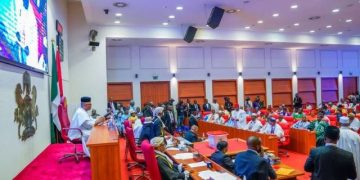
The Acting Head of Conventional Energy at the ECOWAS Directorate of Energy and Mines, Mr. Koumoin Arbaduis, stated this while presenting a paper on “ECOWAS Regional Energy Policies and Key Energy Statistics” at the ongoing delocalized joint meeting of relevant committees of the ECOWAS Parliament in Dakar, Senegal.
Arbaduis said the region’s abundant energy potential, including an estimated 25,000 megawatts of hydroelectric capacity, has yet to translate into adequate electricity supply for millions of people across member states due to challenges such as inadequate generation capacity, low electricity access rates, high technical and commercial losses, expensive transmission networks and heavy dependence on petroleum products.
To address these challenges, he said ECOWAS has developed a series of regional policies and frameworks designed to strengthen energy security, improve access to electricity and promote sustainable development.
He explained that the first ECOWAS Energy Policy, adopted in 1982 following the global oil crises of the 1970s, laid the foundation for regional cooperation in energy supply, power grid integration and petroleum exploration.
Subsequent initiatives, including the 2003 ECOWAS Energy Protocol, provided a legal framework for investment, trade and cooperation in the sector, while also supporting the establishment of the West African Power Pool.
Arbaduis highlighted other landmark interventions, including the 2006 ECOWAS/UEMOA White Paper on Access to Energy Services for Rural and Peri-urban Populations, which seeks to expand electricity access in underserved communities.
He added that the ECOWAS Renewable Energy Policy and Energy Efficiency Policy, both adopted in 2013, were introduced to increase the share of clean energy in the regional power mix, reduce energy losses and improve access to modern cooking solutions.
The energy expert also pointed to the ECOWAS Bioenergy Policy and the Policy for Gender Mainstreaming in Energy Access, adopted in 2017, stressing that sustainable energy development must be inclusive and ensure equal opportunities for women and men.
On emerging technologies, Arbaduis said the ECOWAS Green Hydrogen Policy Framework and Strategy, adopted in 2023, aims to position West Africa as a competitive global producer and supplier of green hydrogen, with a target of producing at least 500,000 tonnes annually by 2030.
He further noted that the updated ECOWAS Energy Policy adopted in July 2023 reflects evolving economic, technological and climate realities, with priorities including universal access to affordable and reliable electricity, improved governance, energy diversification, enhanced efficiency and wider access to clean cooking solutions.
According to him, the region’s long-term vision is to create “a community with access to modern, reliable and sustainable energy services for improved living standards and socio-economic development.”
The five-day parliamentary meeting, which commenced on June 15, is being held under the theme: “Harnessing Renewable Energy for Rural Electrification and Empowerment of Rural Economies in the ECOWAS Region: The Role of the ECOWAS Parliament.”