
















































*Regional growth forecast to slow to 4.7% in 2026 from 5.2 % in 2025
*Higher energy costs, trade disruption and weaker investment expected to be main drivers of slowdown
By Bamidele Famoofo
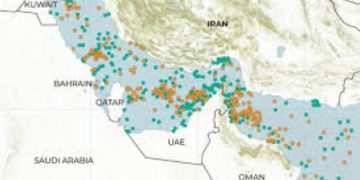
Economic growth across the European Bank for Reconstruction and Development’s (EBRD) sub-Saharan Africa (SSA) economies is forecast to slow to 4.7 percent in 2026 from 5.2 percent in 2025, before increasing slightly to 4.8 per cent in 2027, according to the Bank’s latest Regional Economic Prospects (REP) report. The slowdown reflects higher energy costs, trade disruption and weaker investment linked to conflict in the Middle East.
In the near term, growth is expected to be supported by commodity output and investment. While disruptions linked to the conflict in the Middle East have been met with resilience, the outlook has nevertheless deteriorated, and this is compounding existing fiscal vulnerabilities, commodity price volatility, renewed inflationary pressures owing to higher energy and freight costs, and spending pressures ahead of elections.
The SSA economies in detail
Benin
Benin’s economy is forecast to grow by 7.0 per cent in 2026, down from 8.1 per cent in 2025, before easing slightly to 6.7 per cent in 2027.
The strong performance in 2025 was driven by construction, agriculture, manufacturing and services, alongside the successful completion of an IMF-supported programme in early 2026.
Inflation turned negative at -0.4 per cent in March 2026, reflecting lower food prices. Government finances improved, with the fiscal deficit narrowing to 2.7 per cent of GDP, while public debt declined to 52 per cent of GDP.
The outlook remains positive, supported by investment and infrastructure spending, although risks include higher input costs beyond 2026 and security challenges.
Côte d’Ivoire
Economic growth in Côte d’Ivoire is forecast to grow by 6.1 per cent in 2026, down slightly from 6.5 per cent in 2025, before rising back to 6.5 per cent in 2027, according to the REP.
Strong performance in 2025 was driven by agriculture, construction and manufacturing, alongside robust export activity.
Cocoa and rubber exports supported economic activity, with the current account deficit narrowing sharply to 0.7 per cent of GDP. Improved tax collection helped reduce the fiscal deficit to 3.0 per cent of GDP, in line with West African Economic and Monetary Union targets, while inflation remains low despite a slight increase in 2026.
The outlook remains favourable, supported by domestic demand and exports, although declining cocoa prices and weaker external demand pose risks.
Kenya
Economic growth in Kenya stood at 4.6 per cent in 2025 and is forecast to remain at that level in 2026, before increasing to 4.9 per cent in 2027, according to the REP. Construction, services and mining are expected to offset weaker growth in agriculture and manufacturing.
Inflation rose to 4.4 per cent in March 2026 as higher oil prices increased costs across the economy. The Kenyan shilling remained broadly stable.
Government finances remain under pressure. Public debt reached 70 per cent of GDP, while debt repayments absorbed around half of government revenues. The fiscal deficit widened to 6.1 per cent of GDP.
Higher energy costs and political uncertainty ahead of the 2027 elections continue to weigh on the outlook. Delays in securing another International Monetary Fund (IMF) support programme remain a downside risk.
Nigeria
Nigeria’s economy is forecast to grow by 4.1 per cent in 2026, up from 4.0 per cent in 2025, before easing slightly to 3.9 per cent in 2027.
The modest improvement reflects continued strength in services, industry and agriculture, and the fact that oil production has remained stable at around 1.46 million barrels per day, close to the quota agreed by the Organization of Petroleum Exporting Countries (OPEC).
Inflation rose to 15.4 per cent in March 2026 after declining through much of 2025. Public debt stood at 36 per cent of GDP, although debt servicing continues to absorb more than 70 per cent of federal government revenues.
Election-related uncertainty and inflation remain key risks, while higher oil prices could boost revenues but also increase cost pressures for households and businesses.
Senegal
The EBRD forecasts that Senegal’s economy will grow by 2.5 per cent in 2026 and 2.7 per cent in 2027, slowing sharply after strong expansion in 2025.
Growth reached 6.7 per cent last year, supported by stronger-than-expected production at the Sangomar oil field, where output exceeded 36 million barrels.
Higher hydrocarbon exports reduced the current account deficit from 11.5 per cent of GDP to 5.6 per cent, while the fiscal deficit narrowed to 6.4 per cent of GDP. Inflation eased to 0.8 per cent in early 2026.
Despite these improvements, government debt remained elevated at 120 per cent of GDP at the end of 2025. Previously undisclosed debt continues to affect confidence in public finances. In March 2026, Standard & Poor’s downgraded Senegal’s local-currency credit rating, citing elevated refinancing risks and stalled IMF programme negotiations.





