


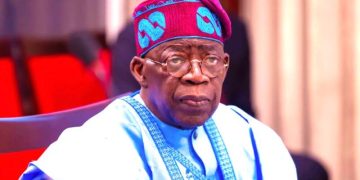



















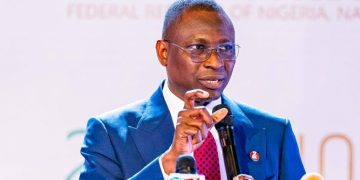














WorldStage– Nigeria’s Minister of Finance and Coordinating Minister of the Economy, Mr. Wale Edun has welcome the economy that closed 2025 on a powerful note, posting a 4.07 per cent real GDP growth in the Q4 .
The GDP crossed the 4 per cent mark for only the second time in a decade outside the immediate post-pandemic rebound and reinforcing signs of sustained macroeconomic momentum.
The latest data released by the National Bureau of Statistics (NBS) shows that the Q4 2025 performance follows a robust 4.23 per cent expansion in Q2 2025 and marks a significant acceleration from the 3.76 per cent recorded in Q3 2024.
Edun described the outcome as evidence that Nigeria’s reform driven economic reset is yielding measurable results under the leadership of Bola Ahmed Tinubu.
Growth Driven by All Major Sectors
Unlike previous cycles where expansion was concentrated in limited segments, the Q4 2025 performance was powered by sustained growth across agriculture, industry, and services pointing to a more structurally balanced recovery.
Agriculture grew by 4.0 per cent, a sharp rise from 2.54 per cent in Q4 2024. The improvement has been attributed to enhanced security in food producing regions, better access to inputs, and targeted productivity interventions aimed at stabilising output and boosting rural incomes.
The industrial sector expanded by 3.88 per cent compared to 2.49 per cent in the corresponding period of 2024, supported by improved foreign exchange liquidity, ongoing energy sector reforms, and renewed investor confidence in the productive base of the economy.
Services led the expansion with 4.15 per cent growth, reflecting resilience and continued dynamism in finance, telecommunications, trade, and technology driven segments of the economy.
Significantly, about 30 subsectors recorded growth rates above 3.0 per cent, underscoring the breadth and depth of the expansion and signalling that economic gains are becoming increasingly diversified.
Full-Year Growth Strengthens Economic Footprint
For the full year 2025, Nigeria’s real GDP grew by 3.87 per cent, an improvement on the 3.38 per cent recorded in 2024. The size of the economy rose to ₦441.5 trillion, up from ₦372.8 trillion in 2024 reflecting stronger fundamentals and expanding output.
According to the Minister, the performance mirrors improved fiscal coordination, disciplined expenditure management, enhanced revenue mobilisation, and reforms targeted at restoring macroeconomic credibility.
He noted that the latest data sends a strong signal to foreign investors, multilateral institutions, and global stakeholders that Nigeria’s reform trajectory is gaining traction and consolidation. With improved macroeconomic coordination, strengthened public finance transparency, and sustained structural reforms, the country is positioning itself as a stable and competitive destination for long-term capital.
The Ministry of Finance reaffirmed its commitment to disciplined reform implementation and strategic inter-agency coordination, while maintaining transparent engagement with both domestic and international stakeholders as Nigeria deepens its growth momentum into 2026.