

























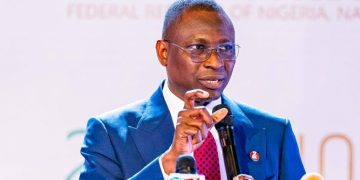

















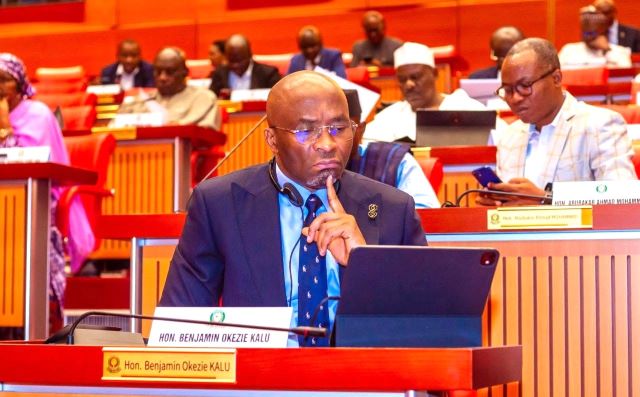
WorldStage– A decisive shift toward digital payment systems and accelerated infrastructure reforms is critical to unlocking the full potential of intra regional trade in West Africa, the Deputy Speaker of Nigeria’s House of Representatives and member of the ECOWAS Parliament, Hon. Benjamin Kalu has said.
Speaking to journalists at the First Extraordinary Session of the regional parliament in Abuja, he noted that intra-ECOWAS trade stood at about 11 percent in 2025.
The session, themed “Deepening Regional Integration through Infrastructure Development and Trade Facilitation,” comes at a time when trade among member states of the Economic Community of West African States remains comparatively low. Kalu noted that intra-ECOWAS trade stood at about 11 percent in 2025, stressing that the region still trades more with external partners than within its own borders.
According to him, persistent infrastructure deficits continue to undermine regional competitiveness. He pointed specifically to stalled or poorly maintained transport corridors that are expected to drive the seamless movement of goods and services across borders, describing them as critical arteries that must function efficiently for trade to thrive.
Kalu also decried prolonged delays at border posts, blaming excessive bureaucracy and inefficient clearance systems for slowing down commercial activity. He cited instances where trucks spend long hours in transit only to face additional delays at border checkpoints, a development he said significantly increases the cost of doing business within the sub-region.
While discussions around a common regional currency have lingered for years, the lawmaker proposed a more immediate and pragmatic solution the adoption of digital currency frameworks and integrated payment platforms. He argued that digital systems could help bypass longstanding political and technical hurdles associated with launching a unified currency.
He further observed that heavy reliance on dollar-denominated transactions is draining the region of scarce foreign exchange, with billions of dollars lost annually to transaction charges. A robust regional digital payment architecture, he maintained, would reduce such costs, enhance financial sovereignty, and retain more value within West Africa’s economies.
Addressing concerns about inflation and currency convergence, Kalu linked economic stability to productivity and intra-regional commerce. He contended that expanding trade within the region would stimulate local production, deepen industrial capacity, and ultimately ease inflationary pressures through stronger supply chains and increased value creation.
Drawing examples from cocoa and lithium, he advocated nearshoring and value addition as pathways to sustainable growth under the African Continental Free Trade Area framework.
By processing raw materials into finished goods within Africa, he said, member states can transform policy aspirations into measurable economic gains, emphasizing that fixing infrastructure and modernizing payment systems would position ECOWAS for a trade boom.