






















































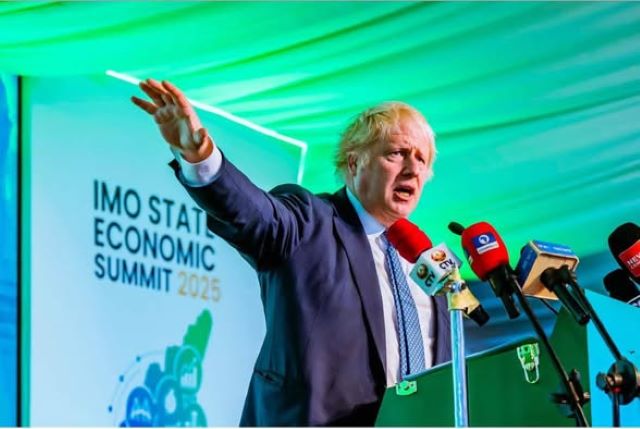
WorldStage– Former UK Prime Minister Boris Johnson’s remarks at the Imo State Economic Summit on December 4-5 have ignited discussion over the nature of Nigeria’s trade relationship with the United Kingdom.
Speaking at Concorde Boulevard in Owerri, Johnson praised the bilateral ties between the two nations, highlighting exports and imports with a mix of humor and gratitude.
“I’m very proud of what we export to Nigeria. We send you pharmaceuticals, bankers, services of all kinds and huge quantities of whiskey… And in return, you send us oil, gas, Nollywood movies, brilliant doctors, nurses, tech geniuses. We are very, very grateful,” Johnson said from the podium, in front of an audience of local dignitaries and business leaders.
He also lauded Nigerian contributions to UK politics, singling out figures such as Kemi Badenoch as potential future leader.
While Johnson framed the exchange as mutually beneficial, critics have seized on the comments to underscore longstanding economic disparities.
In the four quarters leading to Q2 2025, Nigeria exported £1.3 billion in crude oil, £223.8 million in refined oil, and £167.8 million in gas to the UK, while the UK exported £1.5 billion in refined oil products to Nigeria.
The UK ran a £3.3 billion trade surplus with Nigeria over the same period, within total bilateral trade of £8.0 billion.
Johnson’s reference to “huge quantities” of whiskey also drew scrutiny. Nigeria imported around $18 million worth of whiskies in 2024, with the UK as a leading supplier.
While whiskey ranks far below refined oil, machinery, textiles, and generators among UK exports to Nigeria, the comment symbolized broader critiques that Nigeria primarily ships raw materials while importing processed goods, a dynamic critics link to the so-called resource curse.
Economists note that the pattern mirrors broader post-colonial trade structures in Africa, where raw exports fund finished imports, slowing domestic industrialization.
Online commentators argued that Johnson’s lighthearted tone appeared tone-deaf to these historical and economic inequalities, with some suggesting it echoed colonial-era dynamics.
Still, supporters of Johnson’s framing point to the mutual benefits he highlighted, including Nigeria’s cultural exports like Nollywood and the flow of skilled professionals enriching the UK.
Analysts say that with strategic investment in domestic refining and manufacturing, Nigeria could gradually shift this trade dynamic, turning the current import-heavy balance into a more equitable exchange.




