






































WorldStage– As Nigeria enters another season of shopping for credible, acceptable new chairman for the Independent National Electoral Commission (INEC) following the departure of Prof. Mahmood Yakubu, significant controversy is already raging over how the choice will be made.
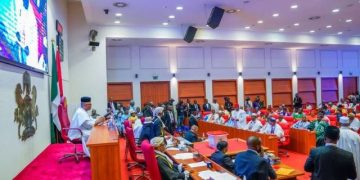
The debate has intensified as Yakubu, whose second and final five-year term expired on November 9, 2025, bowed out and handed over to an interim leader of the electoral body. President Bola Tinubu is expected to nominate his successor soon, which will then be subject to confirmation by the Senate.
Among sources of controversy is the
Executive influence. According to Nigeria’s 1999 Constitution, the President appoints the INEC Chairman, subject to Senate confirmation. Critics argue that this process undermines the independence of the electoral body and erodes public trust. Some, like political activist Timi Frank, assert that only an individual of proven integrity should be considered for the position.
Meanwhile, civil society organizations advocate for a reform of the appointment process to prevent executive overreach, citing past instances of officials with political affiliations being nominated.
Major point of contention is whether the new INEC chair should be chosen based on geopolitical zoning or professional merit.
Sources suggest that President Tinubu may consider a candidate from outside his South-West zone to counter allegations of tribalism and allay opposition suspicions.
However, others, like Dr. Usman Bugaje, dismiss zoning as a “childish idea that has held Nigeria back for decades.”
There’s also concerns about neutrality and integrity. The choice is highly sensitive due to persistent accusations against INEC regarding credibility and integrity, particularly following the 2023 general elections. The next appointee is therefore expected to be an individual of unquestionable neutrality who can restore public confidence in the commission.
Reports indicate that lobbying and political interests are heavily influencing the search for Professor Yakubu’s successor. Allegations have emerged that some are seeking the position to “rig election on their behalf.” While President Tinubu has not yet disclosed his choice, several individuals are reportedly being considered for the position.
They are Professor Olurode, a retired Professor at the University of Lagos and former INEC National Commissioner from the South-West; Kenneth Ukeagu, a former Director of Procurement at INEC from Abia State; Justice Abdullahi Mohammed Liman, a Justice of the Court of Appeal from Nasarawa State, whose name has been repeatedly mentioned but has a history of involvement in controversial cases; Sam Olumekun, the current INEC National Commissioner for Information and Voter Education from Ondo State; and Professor Amupitan, a Senior Advocate of Nigeria from Kogi State.
Following Yakubu’s pre-exit leave, the most senior National Commissioner, May Agbamuche-Mbu, was appointed as the acting INEC chairman on October 7, 2025.
However, as Nigeria awaits the official announcement of the electoral body, three distinguished names have reportedly emerged more prominently at the center of high-level consultations. They are Prof. Joash Ojo Amupitan (SAN), Justice Abdullahi Mohammed Liman, and Prof. Lai Olorode. Each brings an impressive resume, but the process raises deeper questions about the balance between competence, regional politics, and the enduring struggle to preserve the credibility of Nigeria’s electoral system.
The position of INEC Chairman, according to public analyst, Adebamiwa Olugbenga Michael, is not just another federal appointment. It is one of the most politically sensitive and symbolically powerful roles in the country’s democratic framework. Whoever assumes the mantle will inherit the monumental task of rebuilding public confidence after the controversies surrounding the 2023 general elections, where accusations of manipulation, technological failures, and legal battles left a lingering trust deficit between the electorate and the electoral umpire.
Prof. Joash Ojo Amupitan, represents a blend of academic rigor and legal depth. His Kogi State origin adds a North-Central dynamic to the contest, a region often seen as the bridge between Nigeria’s North and South. His background in constitutional law could prove critical for interpreting and implementing the reforms required to fortify INEC’s independence in the face of mounting political pressures.
Justice Abdullahi Mohammed Liman, a former Justice of the Court of Appeal, brings decades of judicial experience and a reputation for fairness. His candidacy, however, comes with its own intrigue, the possible perception that a judge at the helm could either strengthen the legal integrity of the commission or, in the alternative, blur the lines between judicial impartiality and political compromise. Still, his knowledge of electoral jurisprudence could prove invaluable in addressing the onslaught of litigations that have come to define Nigeria’s post-election cycles.
Then there is Prof. Lai Olorode, a veteran scholar of sociology and a former INEC National Commissioner. Known for his strong ideological grounding and advocacy for social justice, Olorode’s return could signal a moral reset, a reminder that credible elections rest not only on technology and logistics, but also on institutional courage. His long-standing critique of Nigeria’s elite-driven political order has earned him both admiration and skepticism within government circles.
Beyond the individual merits of the shortlisted candidates lies a larger national concern. Will this appointment be guided by integrity or political convenience? The notion of a “whistleblower” potentially derailing the process as speculated points to the undercurrent of suspicion that has long haunted Nigeria’s appointment system. Transparency and meritocracy must, therefore, define this critical decision, not the whisperings of political godfathers or sectional calculations.
Nigeria stands at a crossroads where democracy’s survival depends on restoring faith in the ballot. The next INEC Chairman will not only oversee elections but will also shape the moral tone of governance. Whether President Tinubu’s administration opts for a technocrat, a legal mind, or a reformist intellectual, will send a powerful message about its commitment to electoral integrity.
As it stands, the nation watches not merely to know who gets the job, but what values they will bring to it. The credibility of Nigeria’s democracy may well depend on this single appointment.
Tinubu’s nomination of a substantive chair is expected soon, which will bring the contentious selection process to a conclusion.