








































WorldStage Newsonline– AIICO Insurance Plc (AIICO) announced its unaudited results for the interim period ended 30 June 2024 with profit before income tax from continuing operations increasing by 98.3% to ₦14.4 billion in H1 2024 from ₦7.3 billion in H1 2023 while profit for the period grew by 92.4% to N12.924 billion from N6.716 billion in H1 2023.
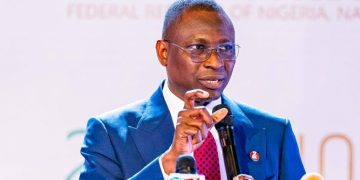
Commenting on the results, Mr. Babatunde Fajemirokun, Managing Director and Chief Executive Officer, said, “AIICO ended the second quarter with strong momentum, achieving commendable financial results through strategic execution despite challenging macroeconomic conditions and highlighting our foundational strengths and commitment to client service. Looking forward, we are prepared to navigate challenges and seize opportunities while engaging customers with valued products, expanding our distribution channels, and leveraging technology for user-friendly digital solutions.”
Mrs. Bisola Elias, CFO of AIICO Insurance on her part said, “Our second quarter performance, marked by a 98.3% year-on-year increase in profit, underscores the effectiveness of our business strategy in the face of significant market and economic conditions.”
Operational Highlights
The Company’s shareholders ratified a dividend of 5 kobo per share at the Annual General Meeting held on July 26, 2024. The dividend will be paid to shareholders from July 2024.
Group Performance Review
Group revenues under the IFRS 17 standard increased 48.0% year-on-year to ₦48.8 billion (H1 2023: ₦32.9 billion) (Premiums under the IFRS 4 standard grew 55.0% year-on-year to ₦87.4 billion (H1 2023: ₦56.4 billion)). Insurance service result, which is insurance revenue less expenses, experienced a significant change year-on-year, with a profit of ₦1.8 billion in H1 2024 from a loss of ₦136.9 million in H1 2023, this was mainly driven by an increase in insurance contract revenue compared to H1 2023.
Insurance service expenses comprise of claims and benefits expenses as well as attributable overheads.
Total income or net insurance and investment result increased by 79.6% to ₦17.3 billion (H1 2023: ₦9.6 billion), driven by the growth in investment income and effective FX asset and liability management.
Our prudent risk management strategy of matching foreign currency liabilities with foreign currency assets has insulated the company’s financial position from the impact of exchange rate volatility, preserving value for shareholders.
Total assets increased by 11.9% to ₦355.8 billion as of H1 2024 (H1 2023: ₦318.1 billion) driven mainly by a 32.5% growth in cash and cash equivalents, which constitutes ca. 6.9% of the total assets.
Total liabilities increased by 8.8% to ₦289.8 billion as of H1 2024 (H1 2023: ₦266.3 billion). This was driven mainly by a 11.5% growth in insurance contract liabilities, which constitute ca. 83.9% of the total liabilities.
Total equity increased by 27.3% to ₦66.0 billion as of H1 2024 (H1 2023: ₦51.8 billion) mainly due to a 55.3% increase in retained earnings to ₦30.5 billion as of H1 2024 (H1 2023: ₦19.6 billion) from profits made during the period.
Non-life Insurance
Non-Life insurance service revenue increased by 65.9% to ₦24.3 billion for H1 2024 (H1 2023: ₦14.7 billion) with gross written premium for the period growing by 69.6% to ₦33.1 billion for H1 2024 (H1 2023: ₦19.5 billion). The growth was driven by an expansion across various product lines, including special oil, motor, and fire insurance. Special Oil contributed most significantly, with 49.1% of the total non-life gross written premiums, while fire and motor contributed 14.9% and 10.9%, respectively for H1 2024. The growth in the contribution of oil and gas is a result of our focus on the product and our increased capacity for risk, which has led to increased premiums.
Life Insurance
Our life insurance business saw robust growth in H1 2024, insurance service revenue increased by 35.4% to ₦23.9 billion (H1 2023: ₦17.6 billion) for the quarter. While business as usual has not changed, IFRS 17 reporting means that premiums collected are recognized as revenue when they are earned.
As a result, for our long-term business, revenue will be earned over a number of years. The company’s ability to collect premiums directly affects revenues going forward and growth in premiums is still a proxy for future revenue growth. The growth in the life business was driven by a 61.6% increase in group life premiums (25.9% of total life insurance) to ₦6.2 billion (H1 2023: ₦3.8 billion). Our ordinary life products’ premiums grew Y-o-Y by 27.0% to ₦9.6 billion in H1 2024 (H1 2023: ₦7.5 billion) amid high inflation and significant Naira depreciation experienced in the Nigeria economy. Our annuity business grew with premiums increasing by 29.4% to ₦8.1 billion in H1 2024 (H1 2023: ₦6.3 billion) as retirees sought to insulate themselves from the volatile economic environment.
Changes in sovereign bond yields impact the value of our liabilities and assets. These movements are reflected in the net investment result (in the P & L). Therefore, asset-liability management is key in the company’s Life business, given its product mix.
AIICO Multishield
In H1 2024, insurance service revenue in AIICO’s health management business decreased by 10.7% to ₦618.1 million (H1 2023: ₦692.1 million). This was largely due to the non-renewal of some key accounts, especially in the public sector. Insurance service margin in 2024 declined to 49.6% (H1 2023: 60.8%). This was due primarily to an increase in insurance service expense to ₦311.5 million (H1 2023: ₦271.1 million). Cost pressures have increased over the last year as the Naira has depreciated – many drugs and healthcare equipment are imported, meaning that even for the same level of service, claims are more expensive. These increases in expenses cannot be fully transferred to customers. As a result, the company’s insurance service results reduced to ₦306.6 million compared to (H1 2023: ₦420.9).
AIICO Capital
In H1 2024, net investment and other income in AIICO’s asset management business declined 1% to ₦3.08 billion from ₦3.1 billion in H1 2023. Income from our asset management business has been affected by the high interest rate environment which affects the ability to raise low-cost funds.
Although trading activity in the capital markets has declined markedly over the last 2 years, our focus on diversified investment strategies helped mitigate downward pressure on revenues. Operating expenses increased 12.7% year-on-year, resulting in the cost-to-income ratio rising from 45.3% in 2023 to 64.7% in 2024. Profit before taxes decreased by 62.3% to ₦221.9 million (H1 2023: ₦588.1 million).
Outlook
U.S. inflation cooled for the third consecutive month in June, signaling a potential end to the most severe price surge in four decades. This downward trend has increased expectations of interest rate cuts by the Federal Reserve as early as September. The latest data reinforces the Fed’s confidence in inflation returning to its 2% target. Concurrently, President Biden’s withdrawal from the presidential race has caused a stir in the markets, as investors grapple with the implications for U.S. economic policies. While easing inflation offers a glimmer of optimism, the evolving political landscape casts uncertainty over future economic trajectories, including inflation, consumer spending, monetary policy, and fiscal management. Investors are cautiously assessing economic policies and the campaign’s potential impact on the stock market and the economy.
Nigeria is grappling with a complex economic downturn, characterized by unprecedented inflationary pressures and currency depreciation. The recent approval of a $2.25 billion World Bank loan is a critical intervention aimed at stabilizing the economy and supporting the government’s ambitious efforts to diversify revenue away from oil while safeguarding oil revenues for fiscal sustainability. To combat escalating inflation, the Monetary Policy Committee increased the benchmark interest rate by 50 basis points to 26.75% from 26.25%, signaling a resolute stance against rising prices. While this monetary tightening measure is intended to stabilize the economy, it risks stifling economic growth and imposing additional burdens on businesses and households. The committee expressed its resolve as it remains committed to taking necessary measures to control inflation. Additionally, the Central Bank of Nigeria reported a significant increase in external reserves to $37.05 billion, bolstering confidence in the country’s ability to meet its foreign exchange needs and external debt obligations. Balancing price stability and economic growth will be crucial in navigating Nigeria’s economic trajectory.
The Nigerian insurance industry is undergoing a period of transformation in response to the nation’s economic challenges. Characterized by a volatile business environment, the industry is redefining its role as a crucial financial safety net. Insurers are increasingly focusing on developing innovative products to mitigate economic instability risks. At AIICO, we recognize the complex interplay of economic headwinds impacting Nigeria’s insurance landscape. These challenges underscore the need for resilient and adaptable insurance solutions. We are positioned as a beacon of stability, offering comprehensive insurance solutions that safeguard individuals and businesses. Our commitment to customer-centric innovation, and robust risk management ensures we remain a strategic partner in navigating these uncertain times.