











































WorldStage– Accelerating digital transformation across Nigeria’s construction sector is critical to reducing lifecycle asset costs, enhancing capital efficiency, and unlocking long-term economic value in the built environment, according to the Nigerian Institute of Building (NIOB).
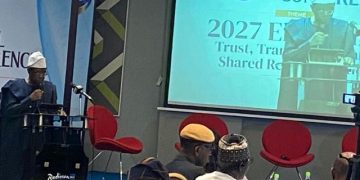
Addressing industry stakeholders at the 35th Lagos Builders’ Conference, NIOB President Bimbo Kolade emphasized that adopting smart technologies—such as Building Information Modelling (BIM), drone surveillance, automated quality assurance, and predictive data analytics—directly improves project yield, mitigates material wastage, and protects institutional capital investments.
Speaking on the theme “Smart Building Processes in the Digital Age: Procurement, Monitoring, Control and Quality Management for Sustainable Construction,” Kolade noted that tech-driven procurement and site management are essential to derisking real estate and infrastructure development across the country. However, he stressed that technology must be coupled with strict regulatory compliance, corporate governance, and professional oversight to deliver bankable assets.
Delivering the keynote address, Dr. Segun Obayendo, President of the Chartered Institute of Transport Administration of Nigeria and Technical Adviser to Vice President Kashim Shettima on Transportation, Logistics, and Innovation, framed data as a primary commercial asset in modern project execution.
“Data should become a fourth pillar of construction alongside people, materials, and methods,” Obayendo said, urging developers and contractors to shift from lowest-cost procurement models to total lifecycle value optimization.
Obayendo argued that real-time monitoring via AI, sensors, 360-degree cameras, and laser scanning allows developers to shift from reactive management to predictive risk mitigation—protecting profit margins and preventing costly structural reworks.
Representing Lagos State Governor Babajide Sanwo-Olu, the Commissioner for Physical Planning and Urban Development, Dr. Oluyinka Olumide, underscored the macroeconomic imperative of digital integration for rapid urbanization. He urged broader adoption of e-planning permits and state digital construction monitoring to bolster investor transparency and public safety.
Reinforcing the shift toward digital governance, Mrs. Florence Gbaye, General Manager of the Lagos State Building Control Agency (LASBCA), highlighted that the state has digitized its permit and approval systems to improve turnaround times, enforce accountability, and eliminate bureaucratic bottlenecks.
Concurrently, Mr. Owolabi Ayoola, Chairman of the NIOB Lagos State Chapter, announced the introduction of a digital authentication system for professional builders’ documentation featuring QR-code verification to eliminate fraud, standardise quality, and protect asset valuations.
The conference highlighted that as Nigeria expands its urban footprint, digital traceabilty, resource efficiency, and transparent procurement will remain pivotal to attracting private equity and institutional capital into the nation’s real estate and infrastructure markets.






