

















































WorldStage– The Senate Committee on Agricultural Colleges and Institutions has unveiled plans to modernise Nigeria’s agricultural education and research system as part of efforts to tackle food insecurity.
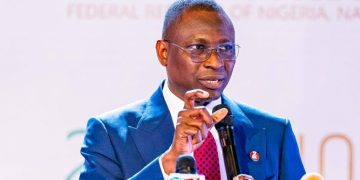
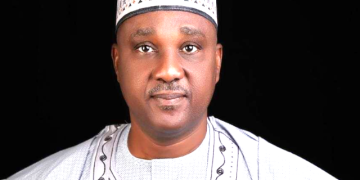
The committee’s Chairman, Sen. Sharafadeen Alli, during a media parley held in Ibadan on Monday, added that the plans would also boost job creation across the country.
The media parley held ahead of the maiden National Legislative Summit and Expo on Agricultural Colleges and Institutions.
The forthcoming summit is titled “Unfolding the Potential of Agricultural Colleges and Institutions through Collaboration and Innovation to Enhance Food Security and Job Creation”.
Alli said the committee had initiated high-level diplomatic engagements with Malaysia, Brazil, China, Germany, India, the United Kingdom, and the European Union to facilitate technology transfer.
He added that the committee had also engaged in investment and training to overhaul Nigeria’s agricultural education system.
According to him, the committee is determined to transform agricultural institutions from theory-based centres into practical and innovation-driven hubs with the capacity to deliver impactful results.
“The era of treating agricultural education as purely academic is over.
“Our goal is to ensure that between 60 per cent and 70 per cent of training focuses on practical areas such as crop production, livestock, and agribusiness,” he said.
He explained that the initiative informed the decision to organise the first National Legislative Summit and Expo on Agricultural Colleges and Research Institutions, from Tuesday to Friday.
The senator further revealed that the committee was reviewing existing laws guiding the Agricultural Research Council of Nigeria (ARCN).
He said that more than 16 affiliated research institutes need to improve their operational efficiency and align their mandates with the nation’s food security agenda.
According to him, the Senate supports the establishment of specialised institutions, including the proposed Federal College of Agriculture in Shani, Borno, to strengthen agricultural development in underserved regions.
“Despite the logistical challenges, the committee has continued to engage heads of agricultural agencies to ensure that over 35 research institutes contribute meaningfully to national food security goals.
“Our focus remains on producing skilled manpower that can bridge the gap between agricultural research and practical farming,” Alli said.
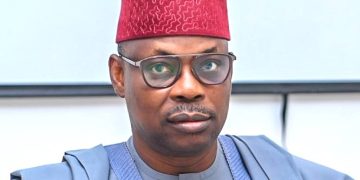
Meanwhile, the Executive Director, National Horticultural Research Institute (NIHORT), Prof. Muhammed Attanda, described the summit as timely, noting that Nigeria urgently needs a strong legislative framework to drive agricultural development.
According to him, agricultural research institutions in the country are not receiving the visibility and recognition they deserve.
“We have outstanding products and innovations that can compete globally, but we lack the platform to showcase them effectively to Nigerians,” he said.
The acting Executive Director of the Cocoa Research Institute of Nigeria (CRIN), Dr Adedeji Abiodun, stressed that the government alone could not shoulder responsibility for agricultural development.
He called for a stronger partnership between Nigerians and agricultural institutions to revive the glory of all research centres in Nigeria.
“We need support and collaboration, as research institutions require adequate resources to function effectively and contribute meaningfully to national development,” he said.
Similarly, the acting Executive Director of the Institute of Agricultural Research and Training (IAR&T), Prof. Oluwatosin Gabriel, underscored the importance of research in national development.
Gabriel, who noted that Nigeria had highly competent researchers across sectors, also lamented that foreign countries benefit more from the nation’s expertise than Nigeria.
“What agriculture urgently needs is stronger legislative and executive support.
“While the Federal Government can provide policy frameworks, states also have critical roles to play, especially in providing land and implementing development initiatives,” Gabriel said.