














































By Abiodun Folarin
WorldStage— The Nigeria Data Protection Commission (NDPC), has projected that Nigeria’s data protection ecosystem could generate more than 500,000 jobs, as it moves to introduce professional certification for journalists to equip them with the skills to explore emerging career opportunities in the sector.
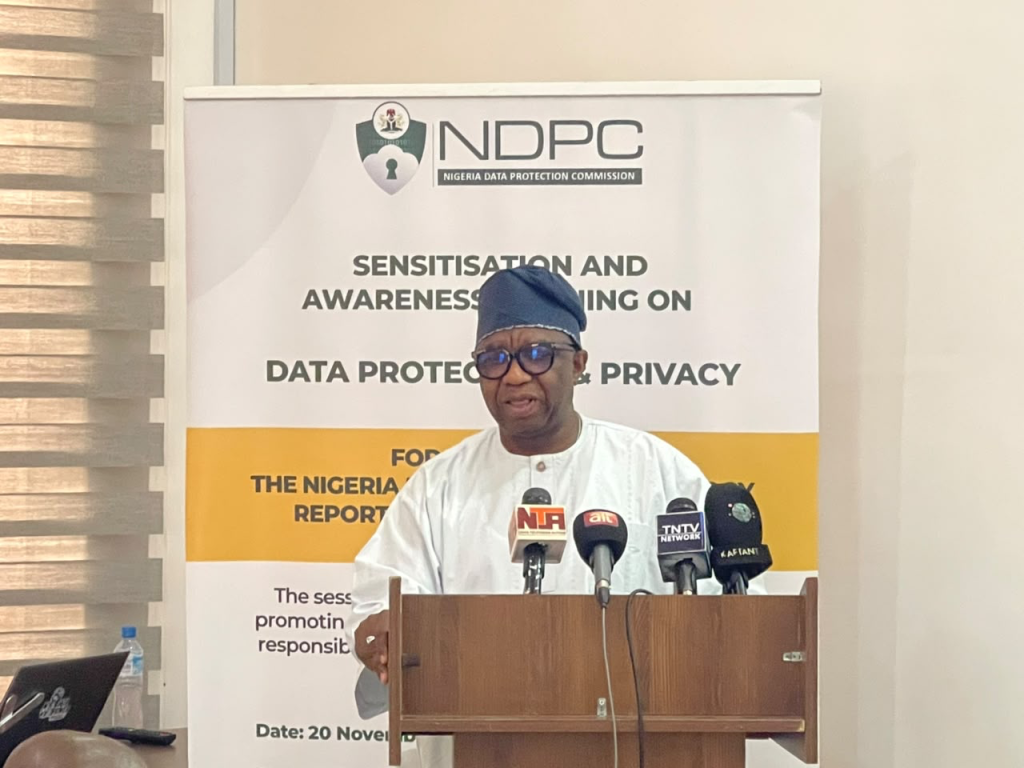
The National Commissioner of the Commission, Dr. Vincent Olatunji, disclosed during the weekend in Abuja at a sensitisation and awareness training on data protection and privacy organised for members of the Nigeria Information Technology Reporters Association (NITRA).
Olatunji said the Commission was considering expanding its capacity building programme for journalists beyond basic sensitisation to professional certification, enabling media practitioners to combine journalism with careers as certified Data Protection Officers (DPOs).
He explained that the initiative would open additional professional opportunities for journalists, particularly as organisations across different sectors increasingly require qualified personnel to oversee their data protection and privacy obligations.
“This is just the beginning. We want to take it to the level of certification, whereby journalists can also practise data protection as a job role, in addition to their regular duties as journalists,” he said.
The NDPC boss disclosed that Nigeria currently had more than 10,000 certified Data Protection Officers, compared with fewer than 1,000 when the Commission began its operations, describing data protection as an emerging sector with significant employment potential.
According to him, the Commission is targeting more than 500,000 jobs across the data privacy ecosystem, noting that over 27,000 jobs have already been created within the sector in less than three years.
He said the demand for data protection professionals was growing locally and internationally, creating opportunities for Nigerians to work with organisations at home and abroad.
He cited Section 32 of the Nigeria Data Protection Act, which requires data controllers and processors to engage the services of Data Protection Officers, as a basis for the growing demand for trained professionals.
The Commissioner also urged journalists to understand data protection principles and privacy rights, stressing that their responsibilities extended beyond reporting developments in the sector to understanding how personal information should be collected, processed, stored and protected.
He described journalists as strategic partners in the country’s data protection ecosystem, noting that informed media reporting was essential to increasing public awareness and encouraging compliance with the law.
Olatunji also disclosed that Nigeria had won an accountability award at the Global Privacy Assembly, an international platform comprising data protection authorities from 145 countries.
He attributed the recognition partly to Nigeria’s Public-Private Partnership (PPP) model, under which the Commission licenses Data Protection Compliance Organisations (DPCOs) to support regulatory compliance among organisations.
According to him, the model has attracted international attention because of its effectiveness in expanding compliance activities and strengthening the country’s data protection framework.
The Commissioner further disclosed that about 18 countries had visited Nigeria within the last two years to understudy its data protection framework and implementation approach.
He said the international interest reflected growing recognition of Nigeria’s progress in building an enforceable data protection regime.
On compliance, Olatunji said the Commission had recorded improvements among organisations operating in the country, particularly multinational companies, following sustained public enlightenment and stakeholder engagement since its establishment in 2023.
He, however, warned that organisations that failed to comply with the provisions of the Nigeria Data Protection Act would face enforcement actions.
He maintained that organisations must take their data protection responsibilities seriously, including appointing qualified officers, establishing privacy policies and ensuring responsible handling of personal information.
Olatunji added that compliance with data protection regulations had become increasingly important to attracting foreign investment, as international investors now consider the existence and enforcement of data protection laws when assessing investment destinations.
Earlier, the President of NITRA, Mr. Blessing Olaifa, commended the NDPC for organising the training and strengthening its relationship with technology journalists.
Olaifa said the programme had exposed participants to important aspects of data protection that journalists might previously have overlooked, particularly the potential legal implications of publishing or republishing personal information.
He expressed appreciation for the Commission’s willingness to build the capacity of media practitioners and urged it to extend the professional development opportunities to more members of the association.
He also welcomed the prospect of journalists becoming certified Data Protection Officers, describing it as an opportunity for members to acquire additional skills and diversify their professional careers.





