















































The Minister of Works and Housing, Mr Babatunde Fashola, says the Highway Development Management Initiative (HDMI) will bring order, accountability and profitable entrepreneurship to the operations, management and maintenance of federal highways.
Fashola said this in a keynote address during a webinar meeting tagged “Public Private Partnership for the National Highway Development and Management Initiative’’ on Thursday in Abuja.
He explained that HDMI was created by his ministry to manage and develop the federal road networks, with the objective to attract sustainable investment and funding in the development of road infrastructure and to maximize the use of assets along the right of way.
“The rationale behind the private sector engagement under the HDMI would provide an avenue that would mitigate paucity of funds, which had hindered roads development in the past,” he said.
According to him, the initiative falls in line with the Economic and Growth Plan of the country which has been in implementation for almost four years and the commitment of President Muhammadu Buhari to radically revamp and increase Nigeria’s stock of infrastructure.
“This is a totally made in Nigeria initiative, within the ministry and in collaboration with Infrastructure Concession Regulatory Commission (ICRC); it is also consistent with our economic policy to create what we need and use what we create.
“The HDMI seeks to bring multi-dimensional resources of skills, manpower, finance, technology and much more into a large portion of Nigeria’s highway governance especially starting with the 35,000km of federal highway networks.
“What this initiative seeks to achieve is to bring order, accountability and profitable entrepreneurship to the operation management and maintenance of our federal highways.
“What we have therefore done is to first identify 10 highways which represent 225km and which is just about 6.4 per cent of our 35,000km federal highway networks and this will constitute the first phase of the HDMI,’’ Fashola said.
Speaking on the benefits of HDMI, the minister said there were opportunities for erection of gantries and directional signs, all of which the ministry had designed standardised and costed.
“These are all a vision we see, this stakeholders’ consultation is the first step to the journey of the 10 routes of 225km.
“On that first phase alone, we see an investment of about N160 billion approximating to about N16 billion per route to unleash opportunities for prosperity.
“Just managing the road assets alone improves not only the houses and the assets around it, it creates opportunities for prosperity we anticipate that there would be 46, 694 direct jobs,’’ he said.
The News Agency of Nigeria (NAN) reports that 10 roads are to be concessioned under the first phase of the HDM initiative
The roads include Benin – Asaba, Abuja – Lokoja, Kaduna – Kano, Onitsha – Owerri – Aba, Shagamu -Benin, Abuja -Keffi – Akwanga, Kano – Maiduguri, Lokoja – Benin, Enugu-Port Harcourt, Ilorin-Jebba.
Fashola, however, admonished those that are interested in providing services on the highways not to send written proposals to his office but form consortium that could manage any aspect of the road that they are interested in.
According to him, in collaboration with the ICRC, details of the procurement process will soon be announced in a public and transparent manner that allows the most effective bids to compete in a process that will deliver service to Nigerians.
The minister said some of these things already existed in some of our highways adding that what HDMI seeks to achieve is to organise them in a way that brings order, accountability and profitable entrepreneurship.
He said that the ministry was also working on a software tagged “Know your Road and Own your Network’’ which would soon be in public view.
According to him, it is a software which will be an updated real time data base for the Nigerian road networks.
Speaking, the Director-General of ICRC, Mr Chidi Izuwah, also appealed to persons who want to be part of the initiative to do the right thing by going through the proper channel.
On her part, Director, Public Private Partnership Collaboration in the ministry, Mrs Eucharia Alozie, said that the HDMI initiative would be of two folds, Value Added Concessioner (VAC) and the Unbundled Assets Approval (UAA).
Alozie added that the regulatory framework was going to represent the structure where the value added concessionaire would be working directly with the ministry, adding that the ministry would be working with ICRC who is the regulators.
“The roles and responsibilities of each regulatory framework for both have been outlined and each body must adhere to the approvals.
“This is to ensure that the provision and constant update of all designs, standards and policies relevant to the highways maintenance and development are maintained,’’ Alozie said.
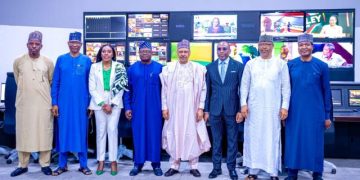
The meeting which was organised by the Lagos Business School had in attendance the Ministers of Aviation, Finance, Labour, Transport, the Attorney General of the Federation and other stakeholders.