



































By Abiodun Folarin
WorldStage — The Independent National Electoral Commission (INEC), and security agencies have pledged stronger intelligence sharing, coordinated security operations and early intervention to prevent political violence ahead of the 2027 general elections.
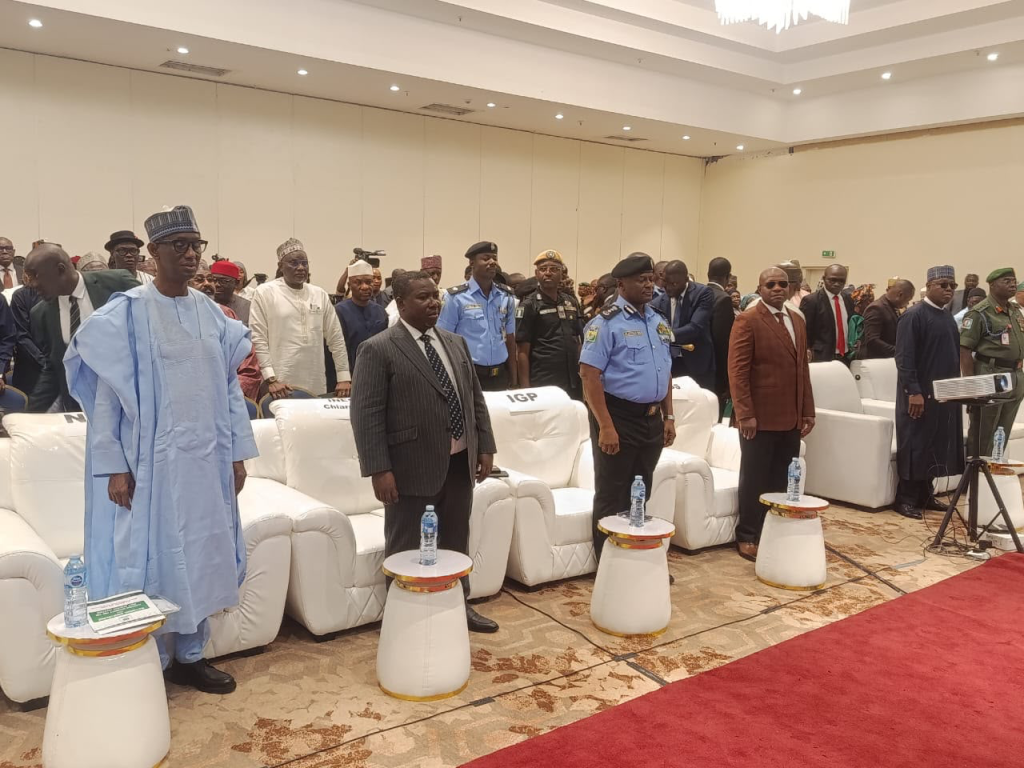
The commitment was made on Thursday in Abuja at the INEC–Office of the National Security Adviser (ONSA) Strategic Election Security Conference, where INEC Chairman, Professor Joash Amupitan, and National Security Adviser, Nuhu Ribadu, stressed the need for coordinated and non-partisan security operations to protect the electoral process.
Amupitan described the 2027 general elections as a critical test of Nigeria’s democratic institutions, noting that the presidential and National Assembly elections would hold on January 16, 2027, while governorship and state assembly elections were scheduled for February 6, 2027.
He said the scale of the exercise, involving more than 100 million registered voters across 177,299 polling units, made effective collaboration between INEC and security agencies indispensable.
According to him, credible elections would depend on the ability of both institutions to exchange intelligence, identify emerging threats and respond promptly to security challenges.
The INEC chairman said election security was a collective responsibility, stressing that the Commission could only deliver credible elections in an atmosphere where voters and electoral personnel were protected from intimidation, violence and interference.
He therefore urged the Inter-Agency Consultative Committee on Election Security (ICCES) to prioritise intelligence gathering, threat analysis and coordinated security deployments rather than waiting for incidents to occur before responding.
Amupitan expressed concern over reported attacks on political campaigns, party offices, supporters and electoral officials in different parts of the country, warning that such incidents could discourage voter participation, endanger election workers and undermine public confidence in the electoral process.
He condemned attacks against INEC officials, declaring that the Commission would not succumb to intimidation or external pressure capable of compromising its constitutional independence.
He also called on political parties and their leaders to take responsibility for the conduct of their supporters, noting that peace agreements would have little impact if political violence persisted at the grassroots.
In his remarks, Ribadu assured Nigerians that the administration of President Bola Tinubu was committed to providing the security required for peaceful, transparent and credible elections.
He said security agencies would discharge their responsibilities impartially and in accordance with the law, emphasising that constitutional independence must be protected and respected.
According to him, the responsibility of government and security agencies is to protect voters, electoral officials, politicians and the wider population before, during and after elections.
He also acknowledged the role of the media in strengthening electoral transparency and accountability, describing journalists as critical stakeholders whose contributions were essential to public confidence in the electoral process.
Ribadu, however, warned that the growing influence of social media and artificial intelligence had introduced new challenges to election security, particularly through misinformation, false narratives and content capable of triggering violence.
He said individuals could use social media to circulate false information capable of generating tension and unrest, even from remote communities.
The NSA urged security agencies to rethink their early-warning mechanisms, assess emerging threats and identify potential flashpoints ahead of the elections.
“Our approach must be proactive,” he said, assuring that security agencies would work continuously to assess the situation and provide protection for Nigerians irrespective of political affiliation.
Ribadu also called on political actors to reject violence, respect opposing views and allow citizens to participate freely in the democratic process.
He cautioned that the struggle for political power could make some candidates desperate, reinforcing the need for vigilance and responsible conduct among political parties and their supporters.