








































WorldStage– Rising interest rates across Western financial centers are tightening capital access and inflating debt-servicing costs for developing economies, creating a severe capital flight risks and choking off critical infrastructure financing across Africa.
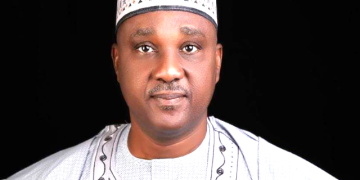
Speaking during the UN General Assembly’s Second Committee debate on macroeconomic policies and financing for development, Nigeria’s Permanent Representative to the United Nations, Amb. Jimoh Ibrahim, warned that high international borrowing costs are severely disrupting global capital flows and undermining debt sustainability across emerging markets.
Nigeria argued that while domestic fiscal and structural reforms remain vital, sub-Saharan African economies cannot insulate themselves from international liquidity shocks without a fundamental overhaul of global monetary and development funding architectures.
GLOBAL FINANCING CONSTRAINTS & REFORM PUSH MACROECONOMIC HEADWINDS
Rising Western Interest Rates & Debt Costs
Capital Outflows & Disrupted Liquidity
Widening SDG & Infrastructure Financing Gaps
NIGERIA’S UN POLICY AGENDA
* UN Tax Convention : Establish global tax rules before 2027 deadline
* Sevilla Commitment : Mobilize concessional financing & lower borrowing rates
* Security & Climate : Coordinated action on regional economic bottlenecks
Push for a Binding UN Tax Convention by 2027
To stem illicit financial flows (IFFs) and enhance domestic revenue mobilization across frontier markets, Nigeria called on UN Member States to expedite negotiations on a binding UN Framework Convention on International Tax Cooperation.
Ambassador Ibrahim urged delegations to finalize an equitable and inclusive tax framework ahead of the 2027 deadline, arguing that a globally coordinated tax regime is essential to prevent corporate tax avoidance, profit shifting, and capital flight from developing nations.
Nigeria also reaffirmed its commitment to the Sevilla Commitment—adopted at the Fourth International Conference on Financing for Development—as a key blueprint for bridging global liquidity deficits and lowering risk premiums for African sovereign debt issuers.
Risk Factors to Africa’s Macroeconomic Outlook
Beyond financial architecture constraints, the Nigerian delegation highlighted non-economic shocks that continue to deter foreign direct investment (FDI) and weaken growth prospects across the continent:
Regional Insecurity & Terrorism: Diverting critical capital from infrastructure and human capital to defense budgets.
Geopolitical Tensions & Supply Disruptions: Exacerbating import inflation and commodity price volatility.
Climate Change Externalities: Imposing severe adaptation costs on coastal and agricultural economies.
Aligning with the Group of 77 (G77), China, and the African Group, Nigeria called for international financial institutions to expand concessional lending windows, provide targeted sovereign debt relief, and de-risk private capital deployment in alignment with the UN 2030 Agenda and African Union Agenda 2063.