



























By Abiodun Folarin
WorldStage— The Federal Government of Nigeria has rejected calls for the return of fuel subsidy, warning that any attempt to restore petrol subsidy could push the pump price to about ₦2,000 per litre within months, while weakening the naira to as much as ₦3,000 to the dollar.
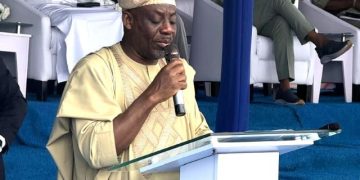
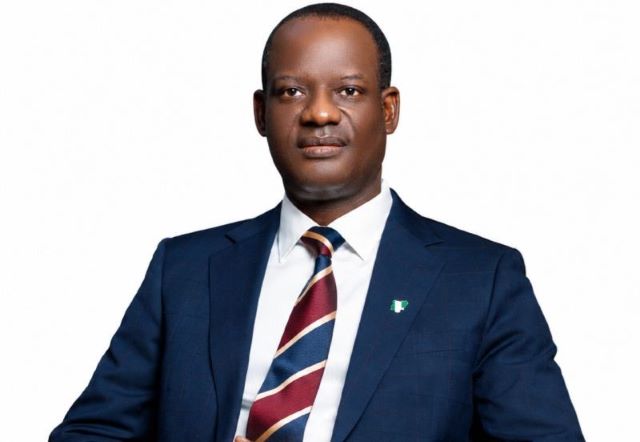
Speaking at a press briefing on the rising fuel price on Thursday in Abuja, the Minister of Finance and Coordinating Minister of the Economy, Mr. Taiwo Oyedele, said returning to subsidy would cost the government more than ₦20 trillion annually.
He said restoring petrol to its pre-reform price, while a proposal to sell petrol at ₦500 per litre, would still require more than ₦16 trillion annually.
“Those amounts, ₦20 trillion and ₦16 trillion, are nearly the size of the entire distribution from the Federation Account in 2025 among all three tiers of government.
“The consequences for salaries, pensions, schools, hospitals and security are not hard to imagine. Third, discounted fuel creates leakages. Our petrol is already far cheaper than in most neighbouring countries.”
Oyedele argued that the proposed intervention was not genuinely a production subsidy but “a consumption subsidy by another route”, because it would effectively involve selling crude below market value to reduce the pump price.
According to him, Nigeria currently consumes about 50 million litres of petrol daily, stressing that subsidising consumption at a time of tight global supply could encourage higher demand, smuggling and cross-border leakage.
He warned that a return to subsidy could weaken government revenues, trigger capital flight, reduce foreign reserves and put pressure on the naira, potentially reversing recent progress in inflation and foreign exchange stability.
The government also dismissed concerns that the current petrol price was solely the result of domestic reforms, attributing the latest surge to a global energy shock, including disruptions to crude and refined-product supplies.
It said Brent crude had risen above $100 per barrel, while diesel exports from the Middle East and Russia had fallen significantly, pushing up refined-product prices and freight costs globally.
He noted that petrol, which sold for about ₦830 per litre before the current global crisis, now averages around ₦1,400 per litre, but argued that the price would have been significantly higher if the subsidy regime had remained in place.
He said, “This is a global problem we are in together, and we must solve it together. Consider where the road ends. Subsidy removal released ₦15.8 trillion to the Federation Account between June 2023 and December 2025.
“Of that, ₦10.4 trillion went to states and local governments. In May 2023, 27 states could not reliably pay salaries. Today, none is in that position.
“At the federal level, about two-thirds of the savings, combined with additional independent revenue and borrowing, were utilised on spending that went directly to average Nigerians through higher wages, infrastructure, electricity subsidy and social transfers. The balance went to stabilising the economy, mainly by way of higher costs of servicing debts as interest rates went up in order to attain declining inflation.”
Government Intervention
Oyedele further said government interventions had included tax and duty waivers on petroleum products, local crude sales to refiners in naira, support for compressed natural gas (CNG), electricity subsidies for vulnerable consumers and measures to strengthen petroleum-market regulation.
He put the value of the petrol tax and duty waiver at more than ₦3.3 trillion for the year to September 30, 2026.
On foreign exchange, the government said the gap between official and parallel-market rates had narrowed from over 60 per cent to below five per cent, while foreign reserves had risen to about $55 billion, which it described as the highest level in 18 years.
The minister also disclosed that more than 120,000 vehicles were now operating on CNG, with over 550 CNG buses deployed nationwide. He said fares on routes served by the buses had fallen by between 30 and 50 per cent.
However, acknowledging the pressure facing households and businesses, the government announced additional measures to moderate the impact of high petrol prices.
Oyedele noted that NNPC Limited would offer a 30-day margin discount on petrol sold at its stations, with priority given to public transport operators nationwide.
He stressed that the measure should not be regarded as a return to subsidy, explaining that the government was effectively directing NNPC to sell the product at cost during the period.
It also announced plans for forward sales of crude to domestic refineries, saying the arrangement would help shield local petrol prices from volatility in the international market as domestic crude production increases and previously committed crude volumes are freed up.
The government maintained that any credible proposal for reducing petrol prices must clearly answer three questions: how much it will cost, how it will be sustainably funded, and what price reduction it will actually deliver.
It warned that short-term relief without sustainable financing could ultimately result in higher taxes, unpaid salaries and pensions, increased borrowing, money creation and renewed pressure on inflation.
“The subsidy does not lower the cost of oil. It only changes how it is paid and when,” the Ministry said, insisting that sustainable relief must focus on increased domestic refining, cheaper alternative fuels, targeted support and macroeconomic stability.