


























































WorldStage– The Federal Government has validated the Nigeria Cashew Industry Roadmap, to boost local processing, create jobs and increase value addition across the cashew value chain.
The Minister of State for Industry, Sen. John Enoh, disclosed this at the Stakeholders’ Validation workshop on the Nigeria Cashew Industry Roadmap on Wednesday in Abuja.
Enoh, represented by the Permanent Secretary of the ministry, Dr Chris Isokpunwu, said the roadmap would reposition Nigeria from exporting raw cashew nuts to producing competitive value-added cashew products and derivatives.
He said the roadmap would also support the establishment of a Nigerian Cashew Project Office to coordinate implementation with industry operators and relevant institutions.
According to him, the roadmap will improve farmers’ incomes, strengthen local markets and create employment opportunities, especially for women and youths.
“Cashew is one of Nigeria’s important non-oil commodities with significant potential to support economic diversification and inclusive economic growth,” he said.
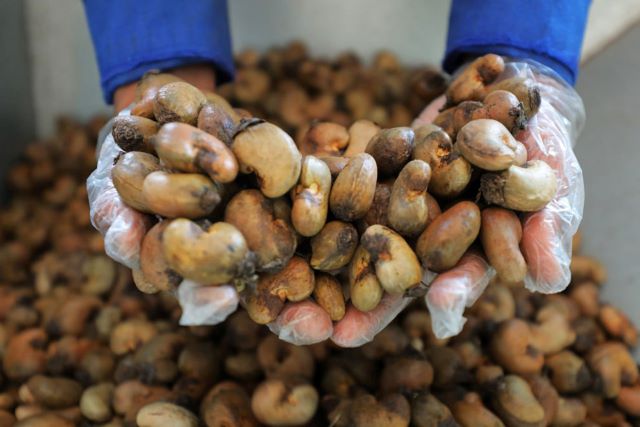
Enoh said Nigeria produces between 300,000 and 350,000 metric tonnes of raw cashew nuts annually, but more than 85 per cent are exported without processing.
He said the practice limits domestic value retention and reduces opportunities for industrial processing and product development.
The minister said that stronger collaboration among government, industry stakeholders and development partners was essential for processing, job creation and export expansion.
He reaffirmed the Federal Government’s commitment to economic diversification through industrialisation under President Bola Tinubu’s Renewed Hope Agenda.
Enoh noted that the 2026 Nigeria Industrial Policy would deepen value chains, promote competitive production, mobilise investments and improve trade competitiveness.
He added that the Cashew Industry Roadmap complements the Shea Nut Value Addition Strategy and the Cocoa Reform Initiative, launched on July 14.
The minister said the roadmap would increase production, expand domestic processing and improve market access for Nigerian cashew products.
He urged stakeholders to move beyond validation, adding that success would be measured by factories established, jobs created, farmers empowered, increased local processing and higher export earnings.
Isokpunwu, in an address read on his behalf by Mr Mohammed Bala, Director, Industrial Development Department, said the cashew industry remained strategic to Nigeria’s non-oil economy, urging greater focus on processing, branding and value addition to boost exports and competitiveness.
He said the roadmap aligned with the Renewed Hope Agenda, supporting industrialisation, expanded non-oil exports, domestic capacity and Nigeria’s ambition of building a one-trillion-dollar economy by 2030.
The Permanent Secretary said the ministry developed the roadmap through collaboration with relevant stakeholders to provide an implementation-focused framework for coordinated growth across the cashew value chain.
He reaffirmed the ministry’s commitment to implementing the roadmap, urging stakeholders to deliver a realistic, inclusive framework that would drive investment, jobs, exports and sustainable sectoral transformation.
The Minister of Agriculture and Food Security, Mr Abubakar Kyari, commended stakeholders, industry associations and development partners for supporting cashew value chain development, urging sustained collaboration to advance the sector.
Kayri said that cashew remained a priority export crop, cultivated in 27 states including the FCT, adding that government’s interventions would boost production, farmers’ incomes, job creation and foreign exchange earnings.
He identified the absence of a comprehensive policy framework as a major challenge while urging stakeholders to validate the roadmap for improved production, processing, marketing and value addition.
The minister was represented by Mr Bukar Musa of the Department of Agriculture in the ministry.
Speaking, President, National Cashew Association of Nigeria, (NCAN), Mr Ademola Adesokan, said the association was committed to work with the government and other relevant stakeholders to ensure the validation would improve the cashew industry.Princess Zahrah Audu, Director-General, President Enabling Business Environment Council, said the administration remained firmly committed to advance the President, Bola Tinubu’s vision for productivity, value addition and sustainable national development.





