










































WorldStage– The Lagos State Government has said that the Red Line Rail in Nigeria’s commercial city will significantly boost mass transit capacity, with the ability to move up to 500,000 passengers daily when fully operational.
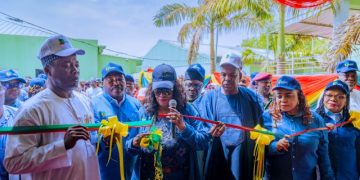
Gov. Babajide Sanwo-Olu disclosed this on Wednesday while speaking with journalists on the sidelines of the 159th meeting of the Joint Revenue Board (JRB), currently holding in Lagos.
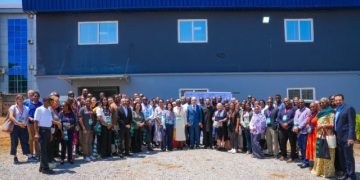
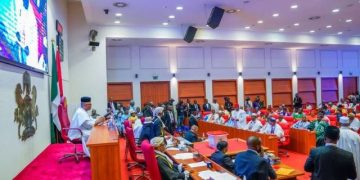
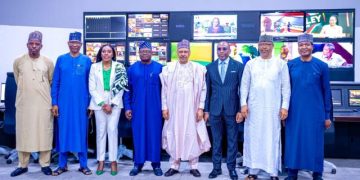
The governor said the meeting brought together the leadership of the Nigerian Revenue Service, chairmen of the 36 state Internal Revenue Services, and the Federal Capital Territory.
He noted that the state was pleased to host the participants, who are expected to remain in Lagos till the end of the week, engaging in knowledge sharing and policy discussions.
On transportation, Sanwo-Olu said that the state had recently completed the signing-off process for the Red Line rolling stock during an official visit abroad.
He explained that the Red Line Rail would be a major upgrade in capacity compared to the Blue Line.
“The beauty of the Red Line is that it is twice as large as the Blue Line. While the Blue Line operates four-car trains, the Red Line will run eight-car trains.
“At full capacity, it will be able to move up to 500,000 passengers daily along the corridor from Agbado to Oyingbo,” he said.
The governor added that discussions were ongoing to extend the rail service further into neighbouring Ogun State to accommodate more commuters.
He recalled that additional rolling stock had earlier been procured for the Blue Line, noting that similar investments were being replicated on the Red Line to strengthen the state’s rail infrastructure.
Sanwo-Olu said the rail projects formed part of a broader multi-modal transport strategy aimed at improving mobility across Lagos.
He also highlighted ongoing interventions in the waterways sector, including the Omi Eko project, which is expected to introduce high-capacity electric boats.
“By this time next year, residents will begin to see increased activity on our waterways with the deployment of electric boats to complement existing transport systems,” he said.
According to him, the integration of rail, road and water transport is designed to ensure efficient movement of people across the state while supporting economic growth.He added that improved transportation infrastructure would ultimately enhance productivity and boost revenue generation for the state.