














































WorldStage– The Nigerian Institute of Electrical and Electronic Engineers (NIEEE) has expressed its readiness to collaborate with the Nigeria Data Protection Commission (NDPC) to develop technical standards that incorporate privacy by design in engineering projects.
NIEEE President, Dr Felix Adegboye, stated this at a hybrid national technical discourse with the theme: “Your Data, Your Power: Engineers Protecting the Future in an AI World,” organised to commemorate Data Privacy Day 2026.
Data Privacy Day is observed on Jan. 28 every year.
The day is set aside to celebrate the signing of Convention 108, the first legally binding treaty protecting privacy in the digital age.
Adegboye noted that the goal of the technical discourse was to raise awareness about protecting personal information online and promote best practices for data protection, emphasising the need for strong passwords and mindfulness of what is shared online.
“We join the rest of the world in celebrating World Data Protection Day.
“We live in the digital age where our data requires as much protection as our lives. Data security and privacy should be given serious awareness and priority.
“As engineers, we need to get involved so that we can collaborate to develop technical standards that incorporate privacy by design in our engineering projects,” he said.
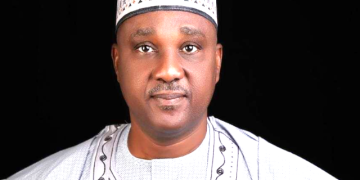
The Keynote Speaker, Dr Vincent Olatunji, National Commissioner/CEO of the Nigeria Data Protection Commission, said that data privacy is a basic human right with adequate legislation under the Nigeria Data Protection Act (NDP Act) 2023.
Olatunji added that the Act empowers citizens to make their own decisions about who can collect and process their data, noting that personal data should only be accessible to authorised users/organisations and must be protected against unauthorised access, disclosure, or loss.
“Under the principle of responsible and ethical data processing, personal data should be collected only for specified, explicit, and legitimate purposes.
“Collection of data should be limited to what is adequate and relevant to the purpose of processing, while personal data should be kept only for as long as necessary to fulfill the purpose for which it was collected,” he said.
Olatunji further stated that engineers have key roles to play in ensuring ethical Artificial Intelligence (AI) and responsible system design. He added that building strong risk resilience designs is essential to protect systems and users from evolving AI-driven vulnerabilities.
He warned that Sections 48 and 49 of the NDP Act empower the NDPC to impose a penalty or remedial fee for non-compliance.
“The penalty for ‘higher maximum amount’ (in the case of a data controller/processor of major importance) shall be the greater of N10,000,000 and two per cent of its annual gross revenue in the preceding financial year.
“The penalty for ‘standard maximum amount’ (in the case of a data controller/processor not of major importance) shall be the greater of N2,000,000 and two per cent of its annual gross revenue in the preceding financial year.
“And/or prosecution and imprisonment of the CEO for a term not more than one year,” he said.
The NDPC National Commissioner added that the demand for AI engineers and data-centric roles continues to dominate global hiring, with 1.3 million new AI-related roles created in just two years, accelerating cross-border competition for skilled talent.
“In Nigeria, the data protection ecosystem can generate over 500,000 new jobs and has already created over 23,000 roles, presenting strong opportunities for engineers to deliver high-value digital services,” he said.
The Guest Speaker, Dr Kennedy Okokpujie, an Associate Professor of Information Communication Engineering at Covenant University, urged engineers to take up their roles as protectors of the future, noting that only engineers decide whether security in a system is optional or default.
“The AI future of Nigeria will not be decided in foreign data centres; it will be decided by the engineers we train and the systems they choose to build.
“The question is no longer whether Nigeria will be part of the AI age but what role it will play,” he said.