
























































WorldStage– The Chartered Institute of Bankers of Nigeria (CIBN) has projected optimism in its 12th National Economic Outlook and Its Implication for Businesses in 2026.
The Jan. 15 presentation came months after those of the Central Bank of Nigeria (CBN) and the International Monetary Fund (IMF), though the CIBN’s outlook seems more optimistic.
The CBN and the IMF respectively see Nigeria’s economy growing at 4.49% and 4.2%, and the inflation rate dropping to 14.45% and 18 % while the foreign reserves rise to N45.78bn and $43bn, among other macroeconomic indices in 2026.
However, in the outlook presentation by its co-host Prof. Biodun Adedipe, the CIBN projects a 4.51% GDP growth rate and a 9.84 % inflation rate, the exchange rate stabilizing at N1.1420/$ in and the foreign reserves hitting $50.8bn.
Keynote Speaker and Chairman Nigeria Society of Economic Baba Ali Yusuf noted in his presentation the Nigeria Tax Act underpins all the positive outlooks.
According to him, the 15% increase in non-oil revenues the reform will bring will improve public service in terms of infrastructure, and provide broad incentives for SMEs—and better ratings for Nigeria.
The finance expert also noted the new tax administration has eliminated multiple taxation and cash collection, reduced compliance burden, and necessitated investment in tax technology
“The year 2025 was a year of consolidation of the reforms the present administration introduced since 2023,” he said, and commended the CBN’s consistency over time in implementing and sustaining the fiscal reforms.
“The difference between optimism and pessimism is the decision we make,” he said.
Apart from the tax reform, other drivers of the stability Nigeria has enjoyed so far, according to Yusuf, include the foreign exchange unification, the agriculture intervention, higher oil production owing to improved security of oil installations, and the AfCTA leverage.
He, however, advised caution, owing to risks he identified as part of the tax reforms, which include compliance challenges, tax infrastructure, expertise deficit, tax structure misclassification, and escalating costs.
There are other challenges he identified to which Adedipe and other experts agreed Nigeria has no immunity against: the Trump 2.0 effect, geo-political tensions, a general slow-down in global GDP—3.20 percent in 20225 to .10 percent in 2026—and energy transition.
But the best time to plant a tree was a decade ago,” Yusuf said of the tax and reforms “And the second-best time is now.”
CIBN began presenting the national economic outlook 12 years ago, according to Adedipe, corporate fiancé scholar and founder of B. Adedipe Associates Ltd.
The co-host, however, added that his firm remains the first ever to initiate the trend in Nigeria, before even the CBN and others caught on with it.
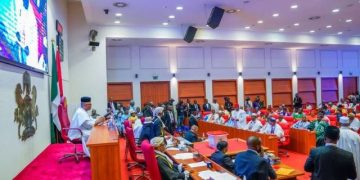
The event held at the Bankers House on the Victoria Island, Lagos, and drew banking and finance experts and scholars, economic analysts and others.





