





































WorldStage Newsonline– The Islamic Development Bank (IDB) has expressed its readiness to partner with the Federal Government to address critical infrastructure gaps in Nigeria’s power sector.
This is contained in a statement by Mr Bolaji Tunji, Special Adviser on Strategic Communications and Media Relations to the Minister of Power, on Wednesday in Abuja.
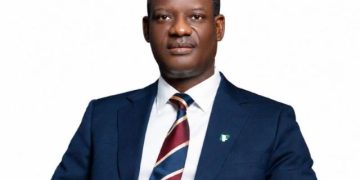
Tunji stated that officials of the Jeddah-based financial institution, led by Mr Alagi Gaye, made the offer during a courtesy visit to the Minister of Power, Mr Adebayo Adelabu.
He stated that the IDB delegation indicated the bank had available funding to support Nigeria’s energy development through a new Country Engagement Framework.
Gaye revealed that the IDB currently manages an active portfolio of nearly 2 billion dollars in Nigeria across various sectors, including energy, transport, agriculture, and education.
He noted that the bank was keen on expanding its footprint in Nigeria’s power infrastructure.
He explained that the bank was developing its first-ever Country Engagement Framework for Nigeria since it joined the IDB in 2005.
“Unlike the previous project-based approach, the bank now prefers programme-based interventions aligned with Nigeria’s sectoral policies, regulatory landscape, and identified challenges.”
Gaye acknowledged Nigeria’s significant electricity access gap and reaffirmed IDB’s commitment to incentivising private-sector investments in the sector.
In his response, Minister Adelabu emphasised the urgent need for substantial investment to achieve stable, efficient, and affordable electricity for Nigerians.
He reaffirmed that improving power supply remained a key priority of President Bola Tinubu’s administration, referencing the Electricity Act of 2023 as a major policy reform to liberalise the sector.
Adelabu highlighted several ongoing initiatives, including the 2.3 billion dollars Presidential Power Initiative (PPI) in partnership with Germany’s Siemens Energy, which aimed to modernise Nigeria’s aging power grid.
He said the pilot phase, featuring the installation of 10 power transformers and 10 mobile substations, had already begun improving grid stability, with further expansion planned.
He also referenced the proposed “Super Grid” project, designed to reduce transmission redundancy, which had received support from the World Bank and the African Development Bank (AfDB).
Addressing persistent issues in the distribution segment, Adelabu said that in spite of privatisation, inefficiencies remained.
He noted that the Federal Government retained a 40 per cent stake in Electricity Distribution Companies (DisCos) and was pursuing partnerships to boost their performance.
A major concern, he said, was the metering gap, with only six million meters deployed for 13 million registered consumers.
“To bridge this, the government launched the Presidential Metering Initiative (PMI), which targets the importation of two million meters annually over the next five years.”
Adelabu also mentioned the “Mission 300” programme, which focused on renewable energy deployment for rural electrification.
“Given the difficulty of extending the national grid to remote areas, the government is investing in solar home systems and mini-grids to power households, schools, healthcare centres, and agriculture in rural communities.”
On climate concerns, Adelabu stated that Nigeria’s push for renewables was driven more by necessity than emission targets, noting Africa’s relatively low carbon footprint.
He welcomed the IDB’s willingness to partner with Nigeria and urged the bank to review feasibility studies for upcoming projects.
He expressed optimism about the collaboration, citing IDB’s credibility and financial strength.
“The discussions underscored the potential for partnership in transforming Nigeria’s power sector and ensuring sustainable energy access for all citizens,” he said.