















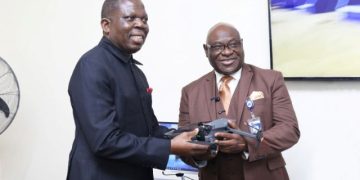




























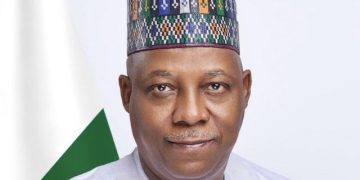


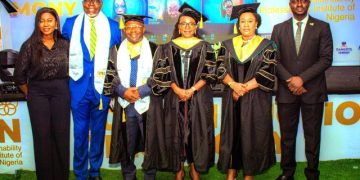


WorldStage Newsonline– For his commitment to the development and dedication to Africa development and prosperity, President Bola Tinubu, on Thursday conferred one of Nigeria’s highest national honors The Grand Commander of the Order of the Niger (GCON), on Professor Benedict Oramah, President of the African Export-Import Bank (Afreximbank).
The award was presented at the Afreximbank’s Annual Meetings, held in Abuja, with head of states and stakeholders from across the continent gathering to reflect on decades of economic progress and chart the course for Africa’s future under the theme “Building the Future on Decades of Resilience.”
Addressing the dignitaries, President Tinubu praised Professor Oramah for his exceptional leadership that has expanded Afreximbank’s assets from $5 billion to over $37 billion.
“Under Professor Oramah’s watch,” Tinubu noted, “Afreximbank became a lifeline during the pandemic, a catalyst for industrialization, a supporter of the AfCFTA, and a champion of Africa’s creative economy.”
The Bank, founded on Africa’s resolve to control its development narrative, has disbursed over $250 billion in trade and development support $150 billion of which came in the past decade alone.
The President also highlighted Nigeria’s direct benefit, receiving over $52 billion that has powered projects in energy, healthcare, manufacturing, infrastructure, and the creative sector including the Dangote and BUA refineries, the African Medical Centre of Excellence, and the African Quality Assurance Centre.
Tinubu also announced Nigeria’s formal adoption of the Pan-African Payment and Settlement System (PAPSS), a move that reduces dependence on foreign currencies for intra-African trade. “I call on all African nations to embrace PAPSS. Financial integration is our path to true independence,” he emphasized.
He gave a rousing defense of his administration’s economic reforms, noting achievements like: Oil production growth to 1.5 million barrels per day, targeting 2.5 million; Stabilizing the naira and easing inflation through strategic investments;
A decline in debt servicing from 96% to below 65%; Over 100,000 Nigerians gaining access to national consumer credit, with 400,000 more in the pipeline; Upgraded 8,800 primary healthcare centers and expanded student loan access; and 279 roads completed, digital inclusion accelerated through fiber optic rollout.
On Bold Infrastructure and Energy Initiatives, Tinubu also spotlighted collaborative ventures with Afreximbank, including the launch of the Africa Energy Bank, headquartered in Abuja, with an initial $5 billion capital injection aimed at powering Africa’s energy transition.
According to him, the fertilizer sector is being scaled to 7.5 million tons annually, positioning Nigeria as Africa’s fertilizer hub. Other transformative efforts include the $3.5 billion Barkasi Deep Seaport and enhanced infrastructure to boost market access and trade efficiency.
He said, “African development is no longer about aid, but about agency,” Tinubu declared. “We must empower our youth, our women, and our entrepreneurs — not as beneficiaries but as builders of a new African century.”
He called for bold, united efforts to strengthen Afreximbank and deepen intra-African trade. “Let us remember this moment — when African leaders stood tall and chose to shape their own destiny.”



