














































WorldStage Newsonline– The National Natural Medicine Development Agency (NNMDA) has appealed for increased support to advance Nigeria’s natural medicine sector.
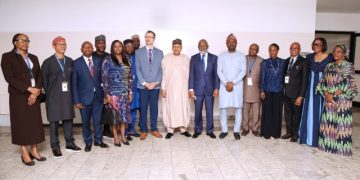
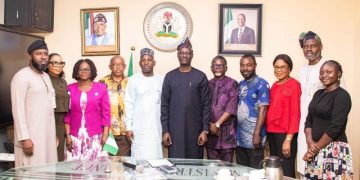
The agency’s Director-General(D-G), Prof. Martins Emeje who made the appeal during a visit by the House of Representatives’ Committee on Legislative Compliance to the agency’s facility in Lagos on Wednesday said the request for support aims to help the agency reach grassroots communities and document their traditional medical knowledge—an essential step toward standardisation and national development.
He cited projections indicating that the global trade volume in biodiversity-related products was expected to reach 5 trillion dollars in 2050.
According to him, NNMDA has made significant progress in promoting natural medicine, including the documentation of over 1,750 medicinal plants across Nigeria’s six geopolitical zones.
He stressed the importance of field-based documentation, contrasting it with internet-based methods, and highlighted its value in shaping policy and legislative decisions.
“Such data is necessary for informing policy decisions and legislative actions by the National Assembly,” Emeje said.
He also revealed that NNMDA had a collaborative agreement with the National Agency for Food and Drug Administration and Control (NAFDAC).
He noted that it was aimed at conducting clinical trials free of charge on products targeting common diseases in Nigeria such as malaria, sickle cell anaemia, and diabetes.
“The agency currently has 18 NAFDAC-registered products,”he said.
The D-G noted that the agency had been upgraded to serve as a National Skills Acquisition awarding body for traditional medical practitioners, making it responsible for their training and certification.
Emeje disclosed that the agency currently had only 136 staff members in spite of its expansive mandate and achievements.
According him, it requires at least 15,480 to effectively operate in all of Nigeria’s 774 local government areas.
He emphasised that the agency’s presence in every local government was vital for identifying and cultivating region-specific medicinal plants for disease treatment.
He added that it aligned with the vision of universal health coverage rooted in indigenous medicine.
Emeje further explained that although the agency’s name includes “medicine,” its mandate” goes beyond healthcare to include agriculture and education.”
He announced the accreditation of a two-year national diploma programme in natural medicine by the Federal Ministry of Education and the National Board for Technical Education.
Highlighting NNMDA’s agro-allied status, he explained that agriculture underpined its health interventions.
According to him, the agency uses science and technology to convert agricultural produce into medicine—choosing to collaborate with nature rather than alter it through synthetic, lab-based drug development.
Emeje projected that cultivating medicinal plants across all local governments could generate up to 147 million jobs, significantly reducing poverty in Nigeria.
He also mentioned recent Memorandums of Understanding with the Netherlands and India on herbal products for livestock, positioning NNMDA as a key player in both human and animal health sectors.
He said that currently, most livestock medicines used in Nigeria were largely imported, while the agency was actively producing natural alternatives.
The d-g acknowledged the past support of the House of Representatives, which facilitated economic opportunities for traditional healers, local farmers, manufacturers, transporters, and entrepreneurs involved in the value chain.
He expressed gratitude for the resolution that led to the current engagement, saying though” passion drives their efforts, it also has its limitations.”
Emeje highlighted NNMDA’s selection to lead two other institutions in a European grant-writing initiative as an example of its growing capabilities.
He, however, noted the challenge was that many internationally competitive grants often targetted areas not aligned with Nigeria’s national health priorities.
He presented visual evidence showcasing the transformation of agency-managed farms across various states since the 10th Assembly’s support, including increased productivity and improved infrastructure.
The agency also reiterated its commitment to staff welfare and international collaboration.
Emeje commended the Deputy Governor of Bayelsa State for directing all local governments in the state to nominate traditional medical practitioners for training.
“An example of the type of support the agency deems essential nationwide,”he said.
He reiterated the need for widespread enlightenment and education on the benefits of natural medicine across all 774 local government areas and proposed the establishment of “NNMDA Fellows” in each LGA.
In appreciation of the House of Representatives’ support, the NNMDA declared the House a “People’s Parliament” and conferred the title of “Natural Medicine Ambassador” on its leader.
The d-g concluded by showcasing innovative product packaging in national colours and the agency’s efforts in developing the capacity of traditional bone setters and birth attendants.
He also highlighted the establishment of the first government-owned herbal pharmacy in Nigeria.
The Chairman of the House Committee on Legislative Compliance, Rep Badau Ahmed, assured that the House would do all it takes to encourage the agency consistently.
Ahmed emphasised that promoting traditional medicine in Nigeria would reduce dependency on imported drugs and create economic opportunities.
“The only thing is to encourage him to write down whatever he has in mind and submit it to us, so we can take it up as actionable items,” he said.
“It is encouraging and empowering to have traditional medicine in Nigeria. It will reduce our reliance on foreign drugs and help our communities benefit from vital opportunities.”



