











































By Abiodun Folarin
WorldStage— The Centre for Journalism Innovation and Development (CJID), has cautioned African governments against using regulations designed to combat fake news and disinformation as instruments to suppress criticism, restrict press freedom and undermine democratic accountability.
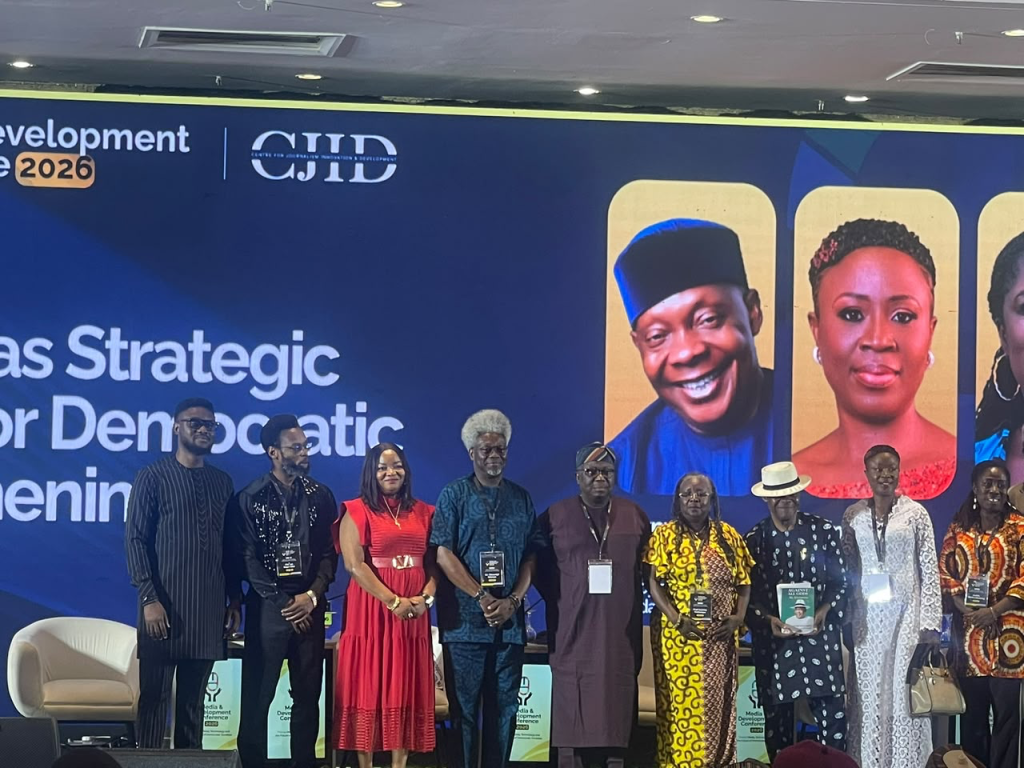
The Chief Executive Officer of CJID, Dapo Olorunyomi, gave the warning on Monday at a Media and Development Conference in Abuja, where he called for regulations governing digital platforms to respect fundamental rights and protect independent journalism.
Olorunyomi said vaguely defined digital offences, disproportionate penalties and excessive executive powers over online content were creating an atmosphere of uncertainty and fear among journalists and citizens.
According to him, such regulations could discourage journalists from investigating issues of public interest, encourage excessive caution in news reporting and make citizens believe that remaining silent was safer than speaking out.
“This is not how democracies build resilience against disinformation. The answer is not to abandon regulation, but to insist that it is lawful, necessary, proportionate, transparent and consistent with fundamental rights,” he said.
He stressed that governments introducing new digital regulations must precisely define the harms they seek to address, while ensuring that measures affecting freedom of expression are subjected to independent oversight and meaningful judicial review.
Describing independent journalism as an essential pillar of democratic stability, Olorunyomi said West Africa had sufficient declarations, conventions and legal frameworks on freedom of expression and access to information but lacked the consistent political will to translate those commitments into practice.
He called for stronger media institutions, sustainable revenue models, credible internal policies and professional development opportunities to strengthen journalism across the region.
He noted that journalists’ courage and personal sacrifices could not substitute for strong institutions capable of protecting editorial independence, maintaining professional standards and sustaining investigative reporting.
According to him, media organisations must move beyond dependence on short-term development projects and develop long-term institutional strategies capable of surviving leadership changes and the withdrawal of external funding.
On artificial intelligence, Olorunyomi acknowledged its opportunities for journalism, particularly in transcription, translation, legislative monitoring, data analysis and the investigation of public expenditure.
However, he warned that the technology could also generate convincing misinformation, reproduce historical biases and overwhelm verification processes through the rapid production of synthetic texts, images and videos.
He further observed that African languages and local content remained inadequately represented in datasets used to train many AI systems, potentially deepening existing inequalities in the global digital economy.
He urged newsrooms to establish clear editorial policies on AI-generated materials, maintain rigorous verification standards, protect confidential sources and safeguard professional integrity.
“Technological convenience must never displace professional judgment. AI must serve journalism, not the other way around,” he said.
The CJID chief executive called for stronger partnerships and institutional commitments to ensure that technology expanded opportunities for African journalism rather than creating new forms of dependence.
In a goodwill message, the Secretary-General of the African Public Relations Association (APRA), Dr Onomityi Ibetan, called for an ethical framework that would promote responsible communication, particularly across social media platforms.
Ibetan said communication was fundamentally a process of co-creation that required mutual understanding, respect and the recognition of the responsibilities of all participants.
He stressed that social media users must understand that their participation in the digital space came with responsibilities, making an ethical framework necessary to promote responsible communication.
According to him, meaningful communication requires participants to regard those they engage with as deserving of love and respect, creating the foundation for constructive conversations and effective engagement.
He said communication should ultimately contribute to human prosperity and the advancement of society.
Ibetan commended the organisers for bringing stakeholders together, expressing APRA’s commitment to deepening collaboration and sustaining engagement on issues affecting communication and development.
Also in a goodwill message, the African Director of the MacArthur Foundation, Dr Kole Shettima, represented by Amina Salihu, reaffirmed the importance of independent journalism to democracy and development.
Salihu said the foundation, which had operated in Nigeria for 32 years, had learnt that journalism was indispensable democratic infrastructure, stressing that citizens must not only receive credible information but also be equipped to engage with the state.
She identified the protection of journalists, investment in media skills and opportunities, and support for editorial independence as essential responsibilities of development partners.
She also called for greater attention to the ethical use of technology, noting that its impact depended largely on how individuals and institutions deployed it.
According to her, the relationship between the media and government must retain an element of constructive tension because the media has a responsibility to question authority and hold public institutions accountable.
“Whenever the media and the state are always on the same side, there is something wrong somewhere,” she said.
Salihu expressed concern over limited awareness of Nigeria’s National Artificial Intelligence Strategy among conference participants, observing that only a few people indicated familiarity with the policy when she requested a show of hands.
She urged journalists, researchers, policymakers and other stakeholders to familiarise themselves with emerging policy developments and establish platforms for sustained engagement on their implications for the media and society.