










































WorldStage— The House of Representatives has passed for second reading a crucial bill seeking to formally empower the National Drug Law Enforcement Agency (NDLEA) to establish, maintain, and operate drug abuse treatment, counselling, and rehabilitation centres across Nigeria.
The proposed legislation represents a strategic legislative shift in Nigeria’s war against illicit substances.
It transitions the national response from a strictly punitive law-enforcement model to a comprehensive, health-oriented framework focused on demand reduction and social reintegration.
The private member bill, sponsored by Hon. Garba Mohammed, seeks to amend the National Drug Law Enforcement Agency Act, Cap N30, Laws of the Federation of Nigeria, 2004.
The legislative amendment targets a structural overhaul of how drug dependency is managed in the country.
Specifically, it provides for the restructuring, regulation, and professional management of rehabilitation facilities under the strict supervision of qualified medical practitioners.
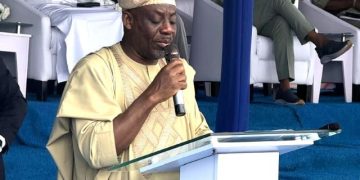
Leading the floor debate at the National Assembly, Hon. Mohammed argued that expanding the legal mandate of the anti-narcotics agency is imperative to effectively curb the escalating rate of substance abuse among Nigerian youths.
He maintained that establishing accessible, state-backed recovery institutions will bridge the critical infrastructure gaps plaguing the health sector.
The legislative push comes at a time when Nigeria faces a severe shortage of specialized mental health and substance recovery infrastructure.
Currently, the country relies heavily on a limited network comprising 11 federal neuropsychiatric hospitals and roughly 31 localized NDLEA hubs providing basic psychosocial services.
Medical and regulatory experts have long warned that these facilities are drastically insufficient to accommodate the estimated 20,000 to 13,000+ Nigerians actively requiring structured clinical therapy and medical detoxification.
By embedding rehabilitation directly into the statutory functions of the agency, the bill aims to decentralise treatment.
This law will give the NDLEA concrete statutory backing to execute long-term infrastructural plans, such as setting up standard rehabilitation centres in all six geopolitical zones.
In recent international policy dialogues, including the United Nations General Assembly sessions, the leadership of the NDLEA, headed by Brig. Gen. Mohamed Buba Marwa (Rtd), has consistently advocated for balancing aggressive interdiction with clinical care.
The agency’s current strategy leans heavily on its War Against Drug Abuse (WADA) campaign. This initiative combines community-level advocacy with institutional therapy.
Passing the bill into law will consolidate these administrative initiatives into a permanent legal architecture.
Supporters of the amendment note that it will unlock structured budgetary funding.
This money will allow the agency to standardize its operational therapeutic protocols and upscale training for clinical counselors.
Following its successful second reading, the bill has been referred to the House Committee on Narcotic Drugs for further legislative scrutiny, public hearings, and stakeholder consultations before it returns to the plenary floor for third reading and final passage.





