



































*As Umahi raises alarm over widespread vandalism of critical infrastructure
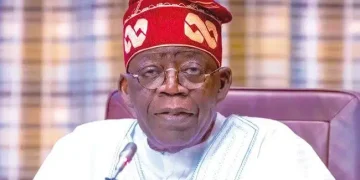
WorldStage– The Federal Government of Nigeria has approved the extension of the Bodo–Bonny Road project by 8.7 kilometres,as well as the Akwanga-Jos-Gombe-Maiduguri Road.
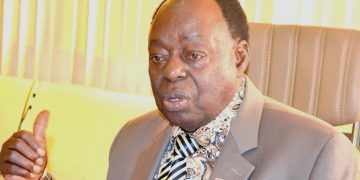
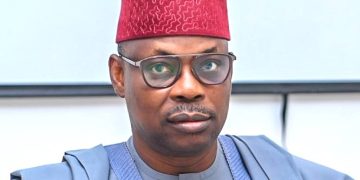
The Minister of Works, David Umahi in Abuja at a news briefing that the Ministry is commited to expanding strategic infrastructure and improving connectivity in the Niger-Delta region.
He said the approval was part of President Bola Tinubu’s broader directive to accelerate critical road projects across the country.
“Yesterday, the president graciously directed that the Ministry of Works should extend the Bodo–Bonny Road by 8.7 kilometres using reinforced concrete up to the East–West road.
“The decision is a major boost to economic activities in Rivers and the South-South.
“The extension will enhance access to coastal communities and strengthen regional integration.
“The extension reflects the administration’s resolve to sustain inherited projects and expand their scope where necessary.
“The president did not stop any inherited project. He directed the continuation of all projects and also approved extensions where they are critical to national development,” he said.
Umahi said the present administration prioritised durable infrastructure,adopting reinforced concrete technology to ensure longevity and value for money.
He explained,“The roads we are building now will last between 50 and 100 years.
“This is very important because Nigerians deserve infrastructure that will stand the test of time.
“Another fantastic news.when we talk about the fourth Legacy project of President Tinubu, it is the Akwanga to Jos to Borno State.
“That was what the president gave to me, that route is supposed to be Akwanga, Jos, Gombe, to Maiduguri.”
Umahi said that the President has thought it wise to extend the project starting from Akwanga, another work should start from Maiduguri, going to Gombe, going to Bauchi.”
Umahi also raised concerns over widespread vandalisation of public infrastructure, warning that the destruction of road assets threatens the sustainability of government investments.
He said, “We are facing massive vandalisation of our critical infrastructure across the country.
“What we are doing to protect our roads is being destroyed by people,”.
He cited the examples of damaged installations, illegal mining activities around bridges, and deliberate obstruction of drainage systems, which he said had contributed to flooding and structural failures in several locations.
“The flooding we witnessed was because underground channels were blocked with refuse. People dump their daily waste inside manholes, and this is one of the reasons for flooding in many places,” Umahi said.
The minister also urged Nigerians to take collective responsibility for protecting public infrastructure.
“This infrastructure belongs to all of us. If we do not protect it, we will continue to repeat repairs, and that is not good for our society,” he said.
Umahi said the ministry was working within available resources to deliver quality projects and ensure transparency in execution.
“We are doing everything possible within the limit of our ability and conscience to ensure value for money in road infrastructure,” he said.
The minister commended Tinubu for sustaining road projects inherited from previous administrations and expanding their scope despite fiscal constraints.
He said, “The president had shown commitment to road infrastructure in spite of the fact that he inherited a very terrible state of roads and bridges, yet he had continued the projects and even extended some of them.” (
WIDESPREAD VANDALISM
The Minister also raised serious concerns over massive and persistent vandalism of critical infrastructure projects across the country, warning that the destruction threatened the sustainability of Nigeria’s road and bridge network.
He said the ministry was compelled to address the growing incidents of sabotage, particularly along the Lagos coastal highway and major bridges nationwide.
According to the minister, infrastructure along the coastal route in Lagos has been repeatedly targeted by vandals in spite of ongoing efforts to secure the area.
He disclosed that during a recent visit to Lagos, he observed extensive break-ins and destruction of protective installations.
“I thank the governor and the people of Lagos state for the assistance and the commission of police. They have massively deployed secuity personnel within the coastal route to check vandalism.
“I want the public to go and see, the things we have done to protect the coastal route being destroyed by people.
“The green barbed wire we put to expose the beauty of the coastal route in a number of sections are being cut and taken by people.
Umahi said the Shagamu–Owode road project was designed with a 12-metre width, but only nine metres had been paved so far, leaving three metres yet to be completed.
He explained that a connecting steel barrier, commonly called wire bars, had been installed along the unfinished section, but pedestrians continue to cross through it.
Umahi also spoke on the removal of green barbed wires previously installed along parts of the coastal highway, saying they were meant to secure and beautify the corridor.
Addressing recent flooding along the coastal highway, the minister attributed the problem to blocked underground drainage systems.
He blamed indiscriminate waste disposal, stating, “refuse dumped into manholes blocks water channels and contributes to flooding in parts of Lagos.
“The flooding occurred because our underground channels are blocked with refuse. People dump their daily waste inside manholes.
“The public has a duty to protect public assets,” he said.
The minister emphasised that while the ministry of works was committed to delivering value for money, no human endeavour was perfect.
“No one is God. No human being does anything in perfect order.
“But we are doing everything within our ability and conscience to address the concerns of Nigerians regarding road infrastructure.”
Umahi commended President Bola Tinubu for introducing reinforced concrete technology in road construction.
He said the move would ensure that newly constructed roads lasted between 50 years and 100 years, unlike many older roads that failed within a decade.
He also warned against the dangers of heavy trucks parking on bridges, stressing that bridges were not designed to withstand static loads.
He revealed that serious structural issues had emerged on the Third Mainland Bridge and Carter Bridge in Lagos, with Carter Bridge requiring eventual demolition following expert assessments.
He, however, disclosed that temporary measures were being implemented to extend its usability for another three years pending reconstruction.
The minister attributed much of the damage to illegal sand mining activities around bridge foundations.
He explained that many bridge piles relied on steel friction supported by surrounding sand, and illegal sand excavation had compromised their stability.
“He added that in one instance, an illegal miner reportedly struck and removed a bridge pile, prompting the ministry to order prosecution.
He listed other acts of vandalism to include the removal of electrical installations, expansion joints, and reinforced concrete barriers on major highways, including the Abuja–Kaduna–Zaria–Kano road and the Second Niger Bridge.
Umahi noted that CCTV systems recently installed on the Third Mainland Bridge, on the directive of the President, had aided security agencies in apprehending suspects involved in theft and sabotage.
“It is done all over the world to install protective and relief materials on bridges to reduce pressure. But people remove them to sell as scrap,” he lamented.
He urged Nigerians to take collective responsibility for safeguarding public infrastructure, warning that repeated repairs due to vandalism strained public finances and slow development.
“If we do not protect this infrastructure, repairs will have to be repeated. That is not good for our society.
“The president is toiling day and night to provide these critical projects. We must work together to safeguard them.”