


















































WorldStage– The ECOWAS Parliament has urged member states to fast-track the ratification of the African Continental Free Trade Area (AfCFTA), describing it as a defining opportunity to transform West Africa into an integrated, prosperous, and resilient economic powerhouse.
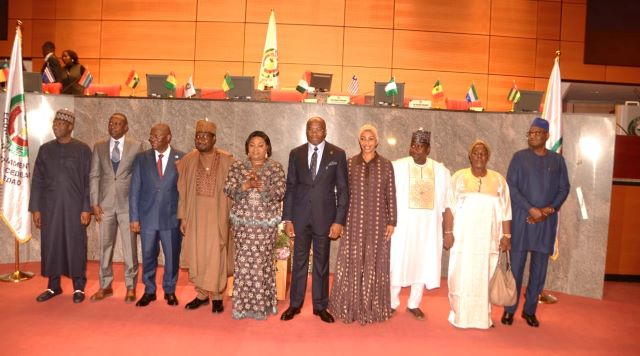
President of the Parliament, Mrs. Hadja Ibrahima, speaking at the opening of the First Extraordinary Session of 2026 on Monday in Abuja, said some member states have yet to ratify the agreement, slowing coordinated implementation and reducing its global influence.
According to her, “The AfCFTA represents a historic opportunity to make our region an integrated, prosperous, and resilient economic power. But it will only succeed if embraced by all governments, the private sector, civil society, women, youth, and technical partners.
“As parliamentarians, our role is decisive. We must harmonise legal frameworks, remove non-tariff barriers and obstacles to free movement, oversee the use of Community resources, and ensure that integration remains inclusive, equitable, and socially progressive.”
She acknowledged Economic Community of West African States (ECOWAS) as one of Africa’s most dynamic regional economic communities. “Over the past decade, our average growth rate of about 5 percent has been among the highest on the continent.
“We have a harmonised macroeconomic framework, a Common External Tariff, and experience in trade liberalisation. Innovative tools such as the Pan-African Payment and Settlement System (PAPSS) and the ECOWAS Brown Card are already operational. Our youthful and entrepreneurial population represents one-third of Africa’s total population a major demographic asset.”
In a goodwill message delivered on behalf of Senate President Godswill Akpabio, the First Deputy Speaker of the ECOWAS Parliament and Nigeria’s Deputy Senate President, Barau Jibrin, said deeper regional integration is essential for West Africa to remain competitive in the global economy.
Barau cautioned that fragmentation and isolation could further marginalise the sub-region, urging member states to pursue economic and political unity to secure markets, protect democratic institutions, and safeguard long-term prosperity.
He described AfCFTA as a modern revival of Africa’s historic trade networks, recalling that pre-colonial West Africa prospered through cross-border commerce and cooperation.
The Deputy Senate President advocated the practical implementation of AfCFTA commitments, including harmonised standards, efficient port systems, transparent customs procedures, and expanded digital trade infrastructure to lower transaction costs and empower businesses.
He further noted that insecurity and political instability continue to threaten integration efforts, stressing that economic cooperation and political stability must advance together.